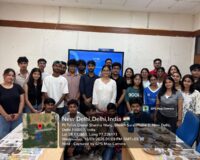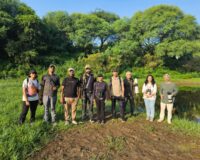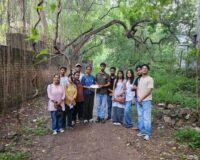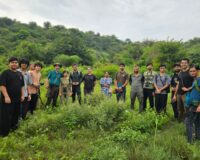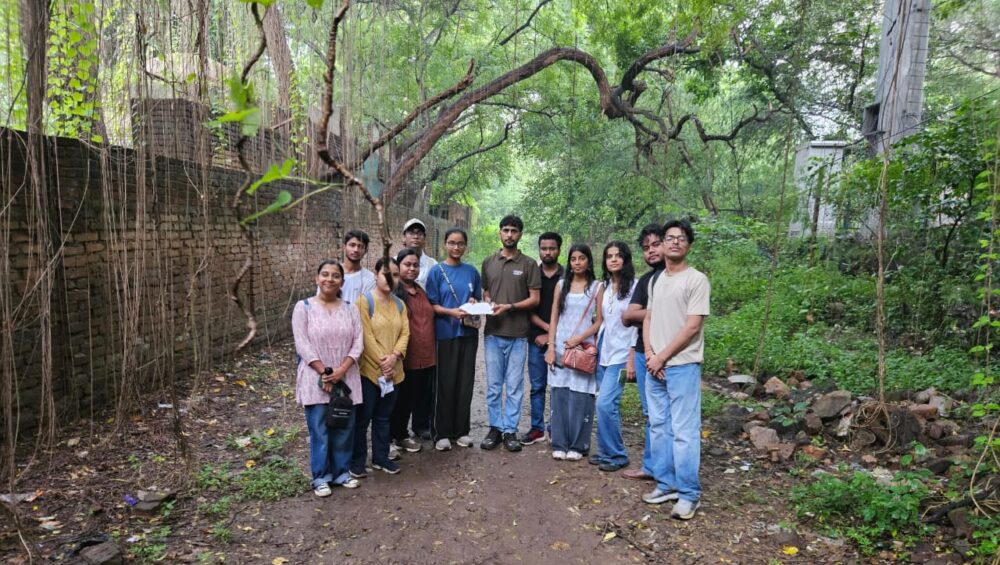
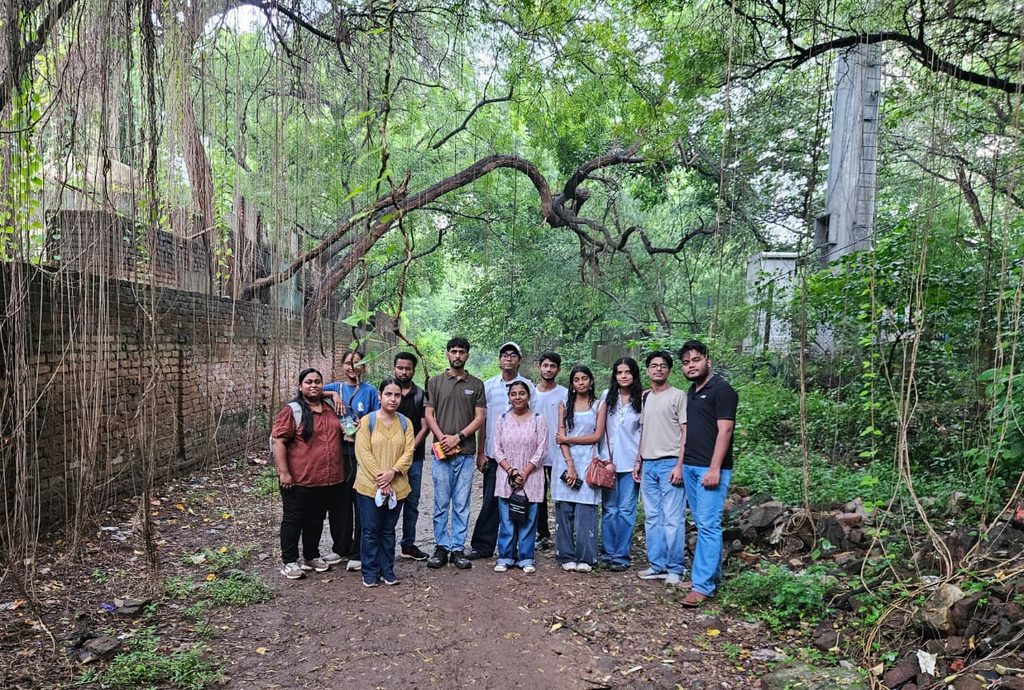
On 12 September 2026, Green Pencil Foundation, in collaboration with Paritantra – The Eco Club of Acharya Narendra Dev College, University of Delhi, organised a Bird Guide Walk at Sanjay Van, Delhi, from 3 PM to 5 PM. The walk brought together members of the Eco Club for an engaging field-learning experience focused on birds, their behaviour, identification and the rich biodiversity found within an urban forest.
Moving beyond classroom-based learning, students had the opportunity to explore Sanjay Van and observe birds in their natural habitat. During the guided walk, participants learnt practical skills including bird identification, behavioural observation, bird counting and field observation techniques. The session encouraged students to look beyond simply identifying a bird and understand its behaviour, habitat and relationship with the surrounding ecosystem.
Learning to Observe Birds Beyond Identification
For many beginners, birdwatching starts with a simple question: “What bird is that?” However, the students quickly discovered that birding is about much more than putting a name to a species.
Participants learnt to observe a bird’s size, shape, colour, movement, habitat, feeding behaviour and calls. They were encouraged to slow down, listen carefully and notice details that can easily be missed during an ordinary walk.
Students were also introduced to basic bird-counting methods and systematic observation. These skills can be particularly useful for students interested in ecology, biodiversity, wildlife research, environmental science and citizen science.
Why Birding Is Valuable for College Students
Birdwatching may begin as a hobby, but it can become a meaningful educational experience for students. It combines curiosity, observation and outdoor learning in a way that encourages students to actively engage with their surroundings.
1. Developing Strong Observation Skills
Birding teaches students to pay attention to small details. Identifying a bird may require observing its flight pattern, body shape, behaviour, call, habitat or feeding habits.
These observation skills extend beyond birdwatching. They help students develop patience, concentration and the ability to notice and record details valuable skills for academic and field-based learning.
2. Connecting Classroom Learning With Nature
Students studying subjects such as environmental science, zoology, botany, geography and life sciences can benefit from field-based experiences.
A bird walk provides an opportunity to see concepts such as habitat, biodiversity, food chains, adaptation and species interactions happening in a real environment rather than only reading about them in textbooks.
3. Encouraging Scientific Thinking
Birdwatching naturally encourages students to ask questions.
Why is a particular bird present in one area but not another? Why are some birds feeding on the ground while others remain in trees? Why do certain species respond differently to human presence?
Such questions encourage curiosity and scientific thinking. Students learn to observe first, record what they see and develop explanations based on evidence.
4. Understanding Delhi’s Urban Biodiversity
Delhi is a highly urbanised city, yet it supports a remarkable variety of wildlife. Green spaces such as Sanjay Van provide important habitats for birds and other forms of urban biodiversity.
Bird walks help students understand that conservation is not limited to national parks or remote forests. Urban forests, wetlands, parks and green spaces are also important parts of the ecological landscape.
For students living and studying in Delhi, birdwatching can therefore be an easy and meaningful way to discover the biodiversity that exists around them.
5. Introducing Students to Citizen Science
Birdwatching can also become an entry point into citizen science. When students record bird species, behaviour, locations and other observations, these records can contribute to a better understanding of local biodiversity.
Learning how to maintain a checklist and record observations systematically can encourage students to continue birding even after a guided walk has ended.
6. Encouraging Time in Nature
College life can often revolve around lectures, assignments, examinations and screens. Spending a few hours outdoors provides students with a different kind of learning environment.
Birding encourages students to slow down, listen to bird calls, observe their surroundings and become more aware of the natural world. Over time, this can help develop a stronger personal connection with nature.
The Role of Eco Clubs in Environmental Education
College Eco Clubs can play an important role in making environmental education more practical and engaging. Activities such as bird walks, biodiversity surveys, tree walks, nature trails, waste-management campaigns and conservation activities allow students to experience environmental issues first-hand.
For Eco Clubs across the University of Delhi, birdwatching can be a particularly accessible activity. Delhi has several green spaces where students can explore urban biodiversity while developing practical observation skills.
A guided bird walk can also be a welcoming starting point for students who have never tried birdwatching before. Once they learn the basics, students can continue independently by maintaining bird checklists, learning bird calls, documenting species through photography and participating in citizen-science initiatives.
From a Two-Hour Walk to a Long Term Interest
The Bird Guide Walk at Sanjay Van was more than just a two-hour outdoor activity. It encouraged students to look at a familiar city from a different perspective.
A bird perched quietly on a branch can become an opportunity to understand behaviour. A bird call can lead to questions about communication. A group of birds feeding together can encourage students to think about food availability and habitat. Even noticing where birds are absent can become an interesting ecological observation.
This is what makes birding such a valuable educational activity. It transforms an ordinary walk into an opportunity to observe, question, learn and discover.
Building a Culture of Nature Observation Among Students
Collaborations between organisations such as Green Pencil Foundation and college Eco Clubs such as Paritantra – The Eco Club of Acharya Narendra Dev College, University of Delhi, can create more opportunities for students to engage directly with nature.
Such initiatives can help students become better observers while developing a deeper understanding of biodiversity and the importance of protecting natural spaces in and around cities.
The experience of a bird walk does not have to end when the walk is over. Students can continue observing birds around their college, homes and neighbourhoods, maintain personal checklists, learn bird calls, document behaviour and participate in citizen-science projects.
In this way, a single guided walk can become the beginning of a long-term interest in nature and conservation.
Birding begins with looking up, but it can lead to a much deeper understanding of the world around us.