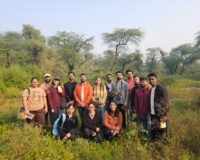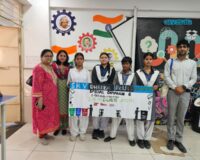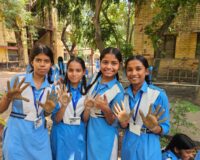
Through hands-on seed sowing, soil exploration and kitchen gardening, Grade 8 students discover the hidden life beneath their feet and develop a deeper connection with nature.
New Delhi | 28 October 2025 | 11:00 AM – 1:30 PM
What lies beneath our feet? Is soil simply dirt, or is it a living ecosystem that supports plants, animals and countless microscopic organisms?
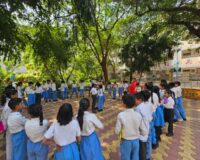
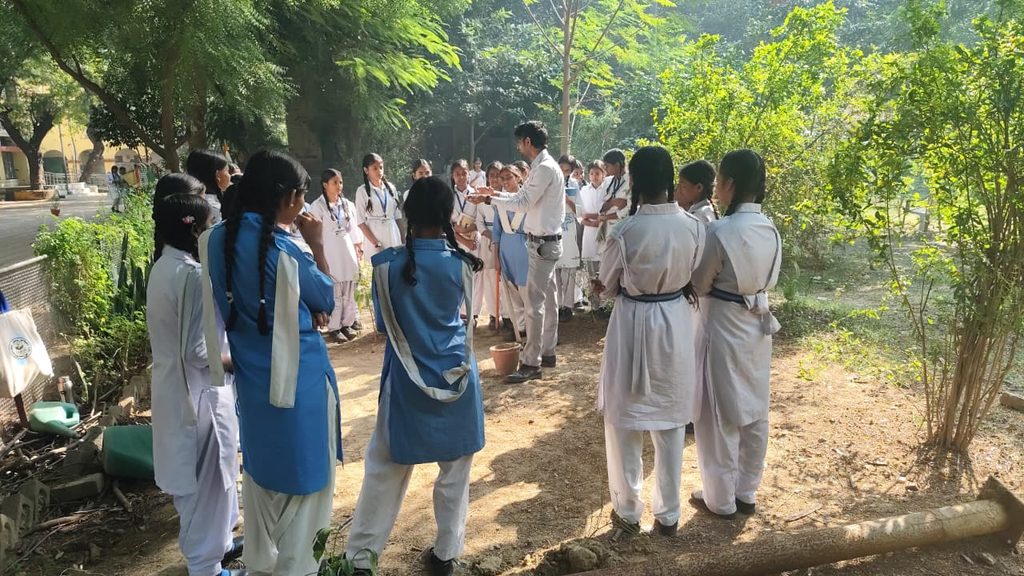
For 200 students of Grade 8 at Government Senior Secondary School, Dhakka, Delhi, these questions became an opportunity for discovery during a nature-based experiential learning session organised by Green Pencil Foundation on 28 October 2025.
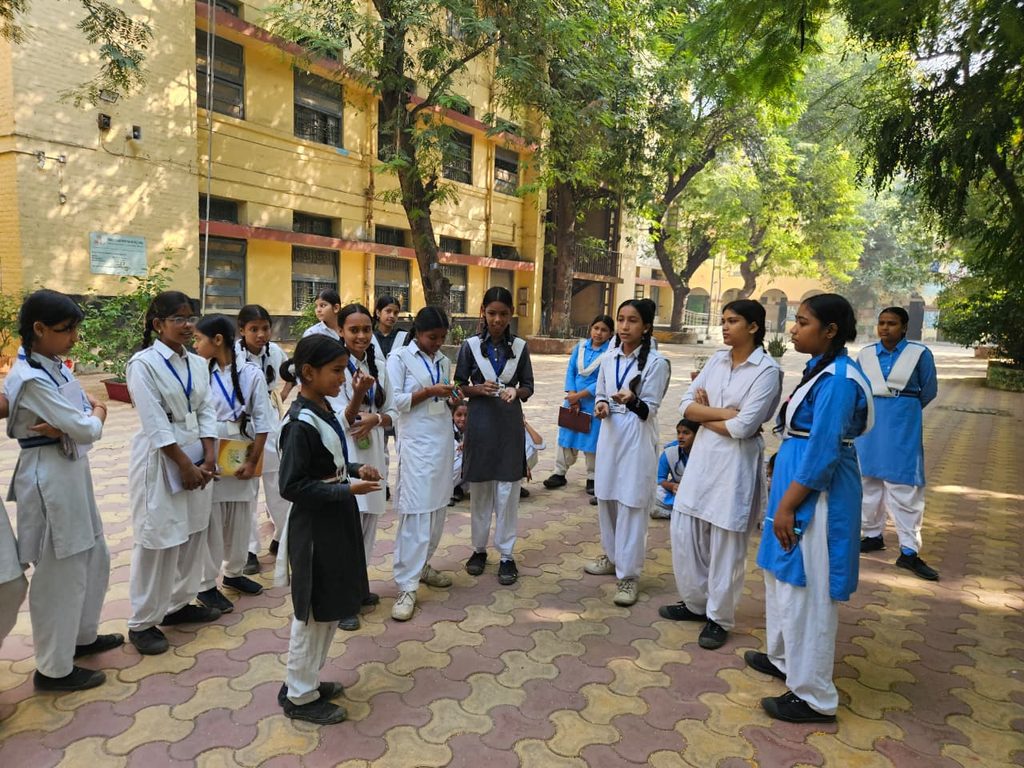
Bringing together students from five sections, the three-and-a-half-hour session focused on understanding soil, exploring the life it supports, learning about composting and experiencing the process of growing food through hands-on seed sowing in the school’s kitchen garden patches.
Rather than limiting environmental education to textbook explanations, the session encouraged students to touch, observe, explore and learn directly from nature.
Discovering the Hidden World Beneath Our Feet
Soil is much more than the ground on which we walk. It is a complex living ecosystem that provides a home to earthworms, insects, fungi, bacteria and numerous other organisms.
During the session, students explored the concept of life in soil and learned how different organisms contribute to maintaining healthy soil ecosystems.
They discussed how earthworms help improve soil structure, how microorganisms break down organic matter and how these natural processes support plant growth.
The activity helped students understand that healthy soil is not just essential for agriculture but also plays a crucial role in maintaining biodiversity and ecological balance.
Understanding the Different Layers of Soil
Another important learning theme was the different layers, or horizons, of soil.
Students were introduced to the basic soil profile and explored how soil is organised into different layers, each with distinct characteristics.
They learned about:
- Topsoil: The uppermost layer, rich in organic matter and essential nutrients, where most plant roots and soil organisms are found.
- Subsoil: The layer beneath topsoil, generally containing less organic matter and accumulating minerals and clay.
- Parent Material: The weathered rock and mineral material from which soil develops.
- Bedrock: The underlying solid rock beneath the soil profile.
Understanding these layers helped students appreciate that soil formation is a natural process that takes a long time and that protecting healthy soil is essential for future generations.
Composting: Turning Waste into a Resource
Can kitchen waste become a resource for growing new plants?
Through the composting component, students explored how biodegradable waste such as vegetable peels, fruit scraps and dry leaves can be converted into nutrient-rich compost through natural decomposition.
They learned about the role of decomposers in breaking down organic materials and how compost can improve soil health, support plant growth and reduce the amount of organic waste sent to landfills.
The discussion also encouraged students to rethink everyday waste and recognise the importance of sustainable waste management practices at home and in school.
Composting introduced a simple but powerful message: what we often consider waste can become a valuable resource when managed responsibly.
From Learning to Action: Students Sow Seeds in Kitchen Gardens
The most engaging part of the session was when students moved from understanding soil to working with it.
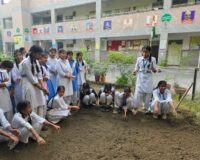
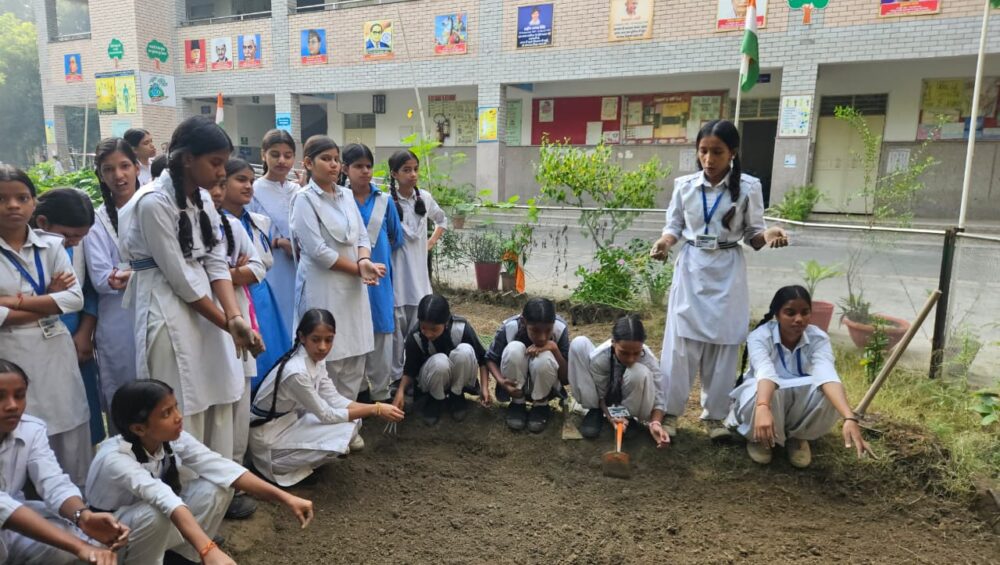
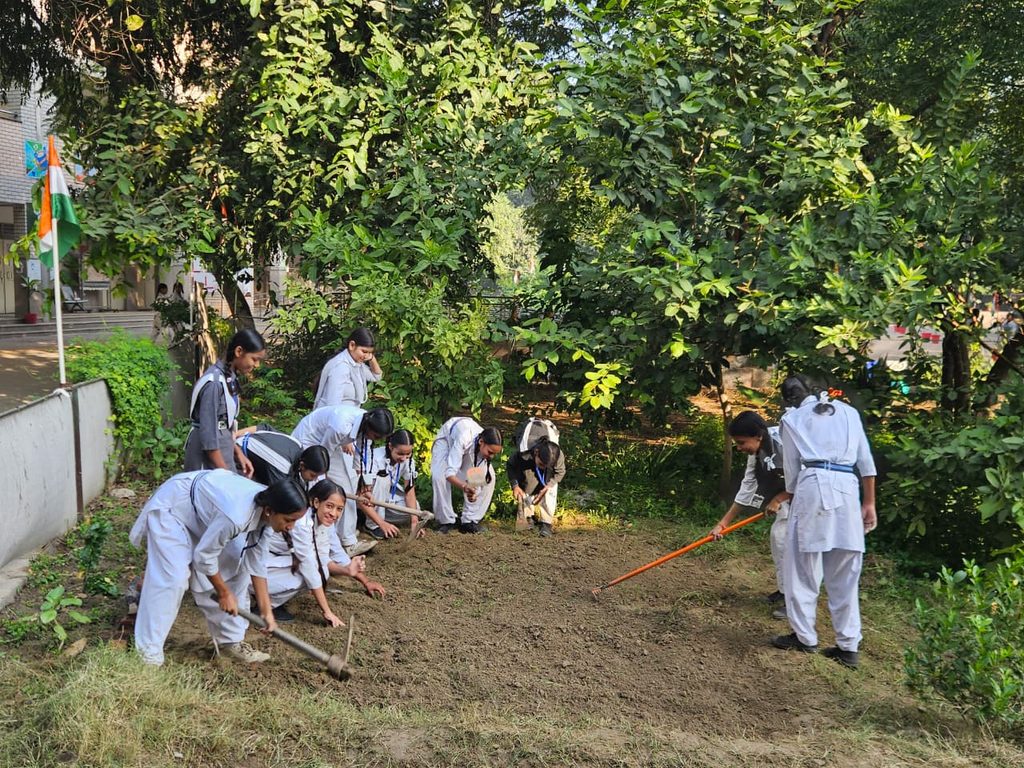
Students participated in seed sowing across different kitchen garden patches within the school premises. They prepared the patches, worked with the soil and sowed seeds as part of a collective effort to develop green spaces within their school.
This hands-on experience allowed students to connect the concepts they had explored during the session with a practical activity.
By sowing seeds themselves, students began their own journey of understanding how food grows, what plants need to survive and why healthy soil matters.
The kitchen garden patches also created opportunities for continued observation and learning. As the seeds grow, students can revisit the patches, monitor plant development and understand the relationship between soil, water, sunlight and plant life.
More importantly, growing plants within the school environment can help children develop a sense of responsibility towards living organisms and the natural resources that sustain them.
200 Students, Five Sections and a Shared Connection with Nature
With 200 students participating across five Grade 8 sections, the session demonstrated how experiential environmental education can engage large groups of schoolchildren in meaningful learning.
The programme connected multiple themes, including soil biodiversity, soil conservation, composting, sustainable waste management and kitchen gardening.
Instead of treating these as separate textbook chapters, students experienced how they are interconnected parts of a larger ecosystem.
The activity also highlighted an important aspect of environmental education: children are more likely to appreciate and protect nature when they have opportunities to interact with it.
Green Pencil Foundation: Making Environmental Education Experiential
At Green Pencil Foundation, we believe that environmental education must go beyond awareness and encourage practical engagement with nature.
Through nature-based experiential learning programmes in schools, the Foundation aims to help students understand ecological systems, develop scientific curiosity and adopt more sustainable practices in their everyday lives.
Activities such as soil exploration, composting and school kitchen gardening help transform ordinary school spaces into living laboratories where students can learn through observation, participation and experimentation.
The session at Government Senior Secondary School, Dhakka, was another step towards nurturing environmentally conscious young citizens who understand the importance of protecting soil, biodiversity and natural ecosystems.
Because the journey towards a greener future does not begin with planting a tree alone. It begins when children understand the soil that makes life possible.