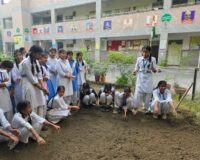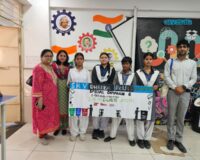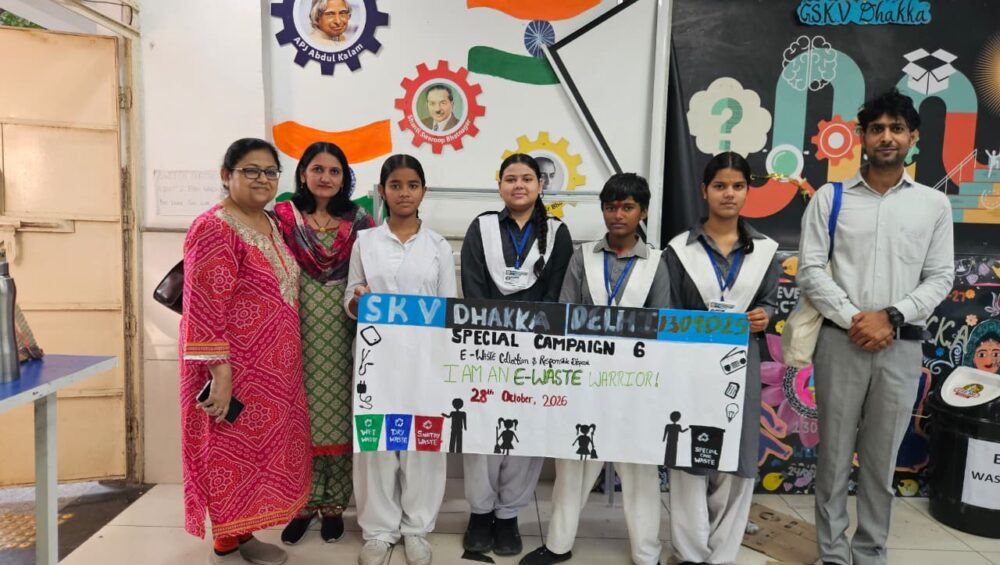
Green Pencil Foundation conducts an E-Waste Awareness Workshop for students of Grades 6 to 9, highlighting responsible electronic waste handling, safe disposal, repair, reuse and upcycling.
New Delhi | 28 October 2026 | 8:15 AM – 9:30 AM
What happens to a mobile phone, broken charger, old battery or unused electronic device when we throw it away? Does it disappear, or does it become part of a much bigger environmental problem?
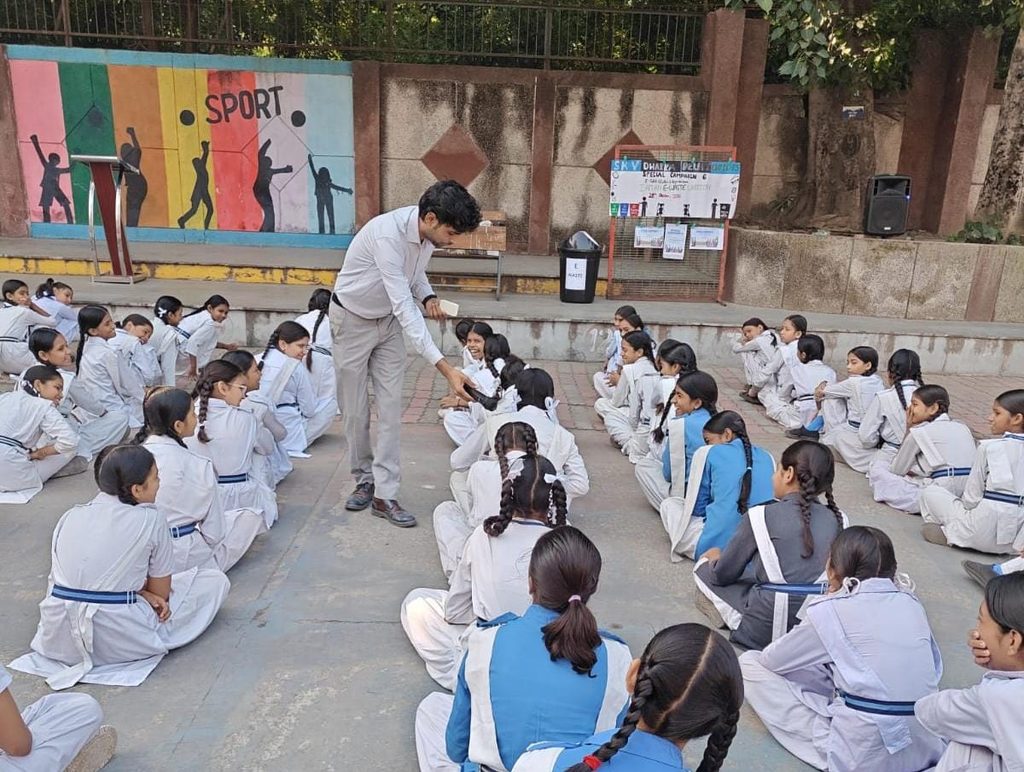
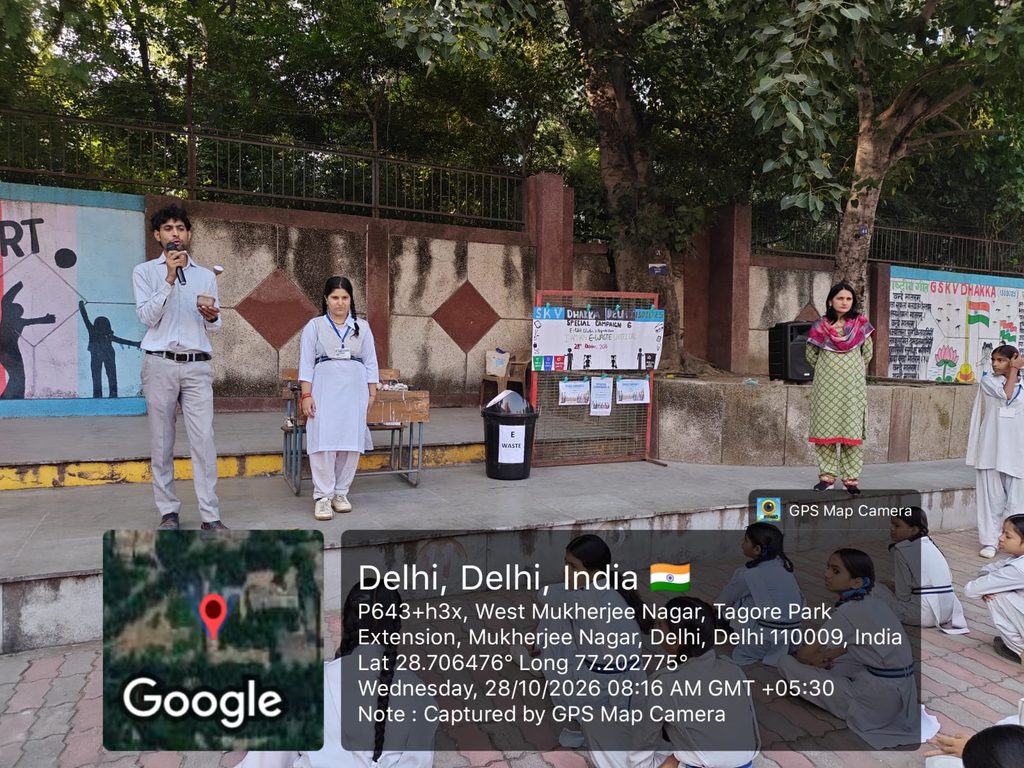
These questions formed the starting point of an E-Waste Awareness Workshop conducted by Green Pencil Foundation on 28 October 2026 at Government Senior Secondary School, Dhakka, Delhi. The session engaged 400 students from Grades 6 to 9, introducing them to the growing challenge of electronic waste and the importance of responsible consumption and disposal.
Through interactive discussions and practical examples, students explored how everyday electronic products, when discarded without proper handling, can contribute to environmental pollution and pose risks to human health.
Understanding the Growing Problem of E-Waste
Electronic waste, commonly known as E-Waste, includes discarded electrical and electronic equipment such as mobile phones, computers, televisions, chargers, batteries, cables and household appliances.
With increasing dependence on digital devices and rapidly changing technology, electronic waste has become one of the world’s fastest-growing waste streams.
During the workshop, students learned to identify common electronic waste items in their homes and communities. They discussed why old electronic products should not be mixed with regular household waste or disposed of carelessly.
The session highlighted how certain discarded electronic components contain hazardous substances, including lead, mercury and cadmium, which can contaminate soil, water and air when handled or processed improperly.
Students also explored the importance of safe handling and responsible disposal to reduce environmental and health risks.
Beyond Disposal: Repair, Reuse and Upcycling
One of the key messages of the workshop was that not every old electronic device needs to become waste.
Students explored practical approaches to extending the life of electronic products through:
- Repair: Fixing damaged electronic devices wherever possible instead of immediately replacing them.
- Reuse: Donating or passing on functional devices to people who can use them.
- Upcycling: Finding creative and useful ways to repurpose suitable discarded materials and components.
- Responsible Recycling: Sending unusable electronic products to authorised e-waste collection and recycling channels.
- Responsible Consumption: Buying electronic products thoughtfully and avoiding unnecessary upgrades.
The discussion encouraged students to rethink their relationship with technology and understand that responsible electronics management begins even before a device becomes waste.
Safe Handling and Responsible Disposal of Electronic Waste
Students also learned about the importance of handling electronic waste carefully.
The workshop emphasised that electronic devices, particularly batteries and damaged electrical components, should not be dismantled, burned or disposed of through informal and unsafe methods.
Instead, unusable electronics should be handed over to authorised collection centres, take-back programmes or registered recyclers.
Students were encouraged to share these practices with their families and communities, helping spread awareness beyond the school environment.
400 Students, One Important Message: Don’t Waste What Can Be Reused
With 400 students from Grades 6 to 9 participating, the workshop created an opportunity to introduce responsible e-waste management to a large group of young learners.
The session connected environmental awareness with everyday choices, demonstrating how individual actions can contribute to reducing electronic waste.
By understanding repair, reuse, upcycling and responsible recycling, students were encouraged to become more conscious consumers of technology.
The larger objective was to help young people recognise that managing e-waste is not only the responsibility of governments and recycling companies. Households, schools, consumers and communities all have an important role to play.
Green Pencil Foundation’s Commitment to Environmental Education
At Green Pencil Foundation, we believe that environmental education should equip children with the knowledge and practical understanding needed to address real-world environmental challenges.
Through school-based awareness programmes and nature-based experiential learning, the Foundation works to build environmental consciousness among young people and encourage sustainable practices in everyday life.
The E-Waste Awareness Workshop at Government Senior Secondary School, Dhakka, was part of this effort to introduce students to responsible waste management, circular economy principles and sustainable consumption.
As technology continues to become an inseparable part of our lives, educating the next generation about its environmental footprint is increasingly important.
The message for the 400 young participants was simple: Before throwing away an electronic device, think about whether it can be repaired, reused or responsibly recycled. Because a sustainable future depends not only on the technology we create but also on how responsibly we manage it.