Date: 13 October 2026 | Initiative: Nature Education and Experiential Learning
What happens beneath our feet when we walk on the ground? What makes soil healthy? Where do ants build their homes, and why can earthworms, slugs and other tiny organisms be found living in the soil? These were some of the questions that students explored during a Nature Education Outdoor Class organised by Green Pencil Foundation on 13 October 2026.
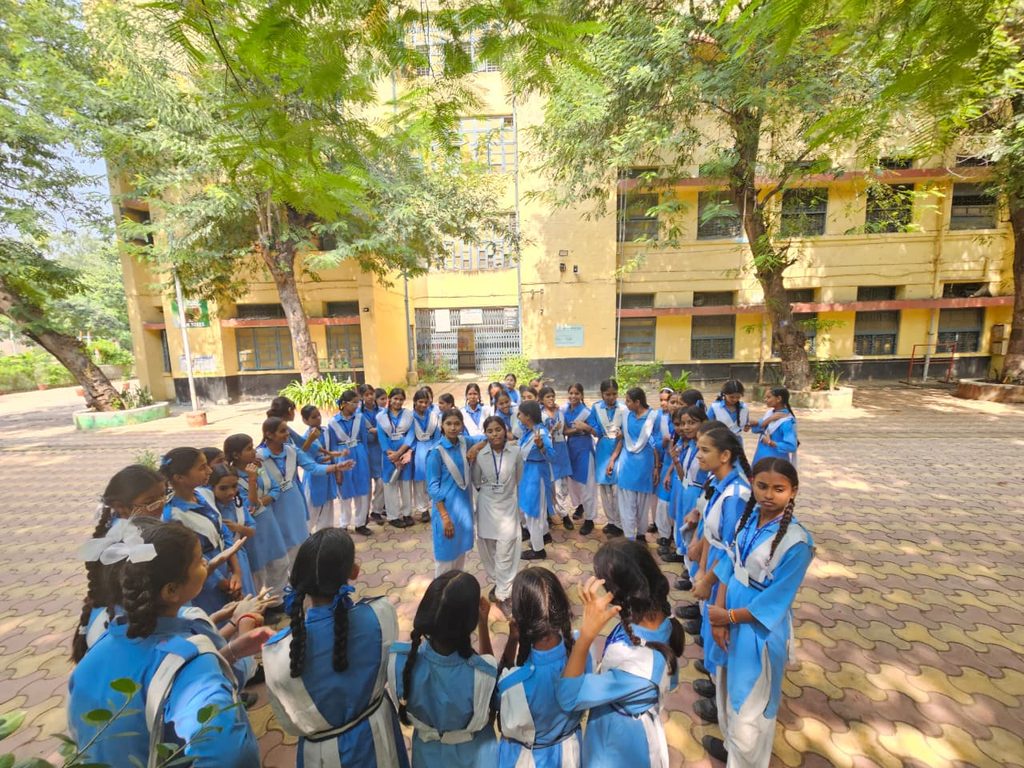
The session engaged students of Grades 5 and 8 in an interactive outdoor learning experience, encouraging them to step beyond the conventional classroom and discover the natural world through observation, investigation and hands-on exploration.
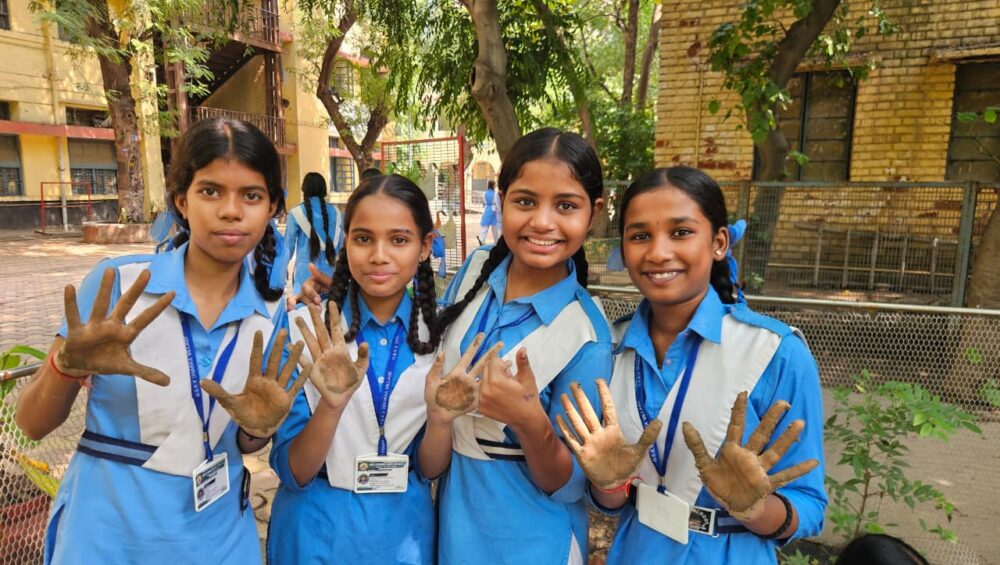
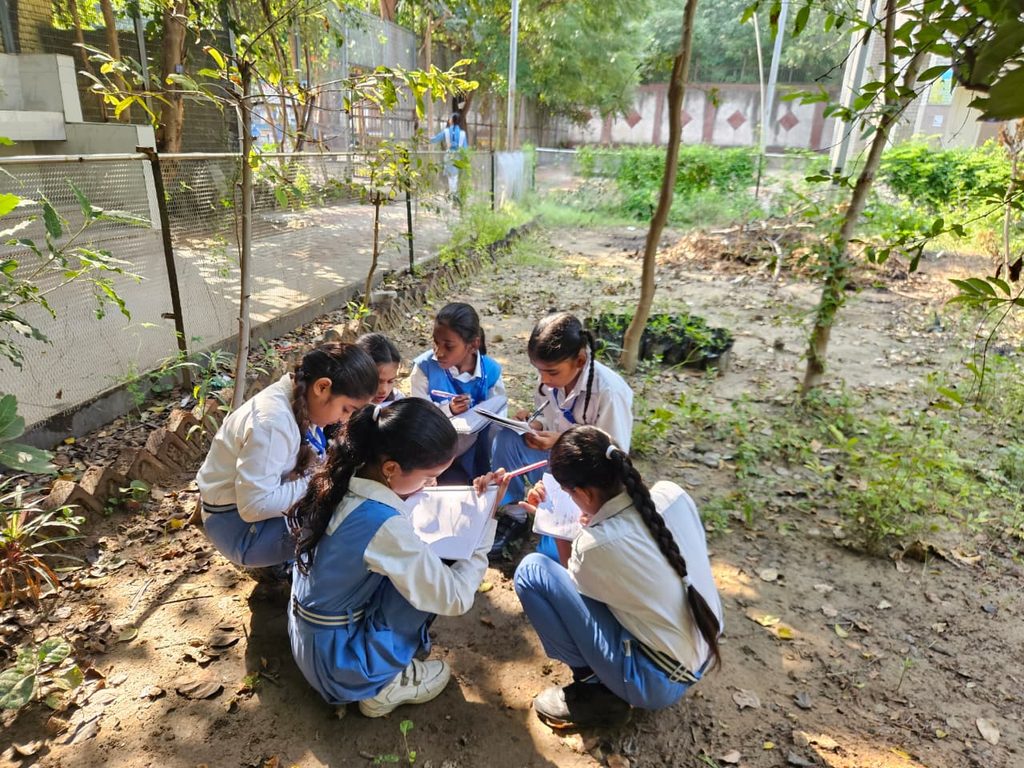
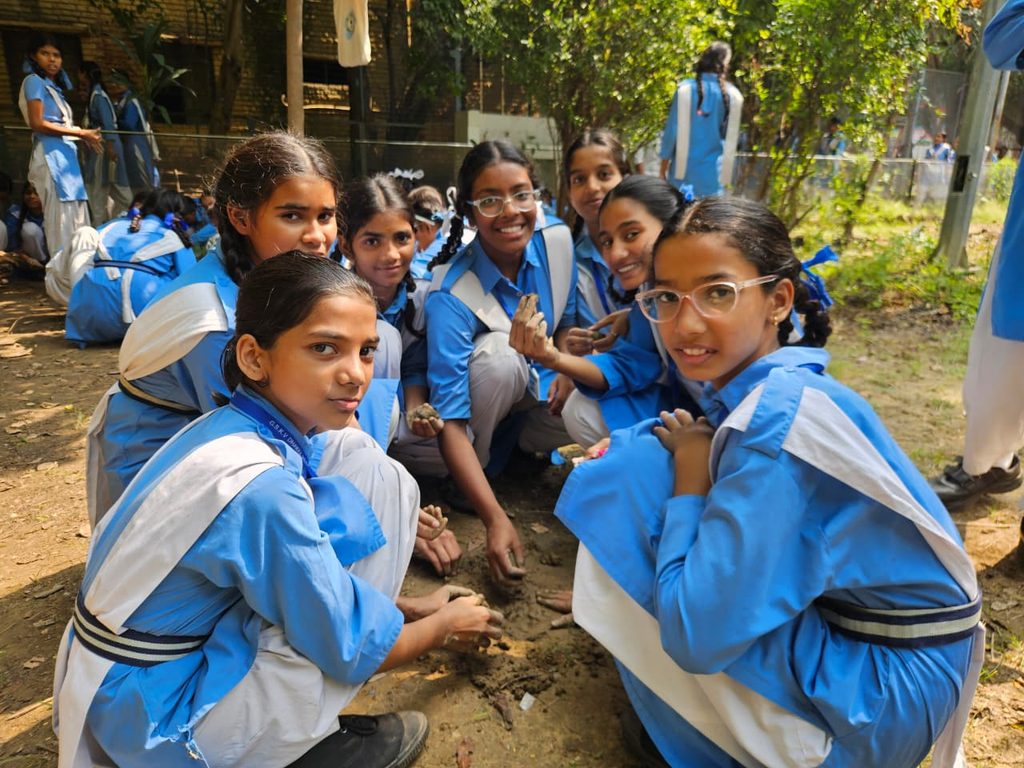
Taking on the role of Soil Detectives, students examined soil closely, explored its different characteristics and discovered the small living organisms that make soil a fascinating and complex ecosystem. From observing soil colour, texture and moisture to identifying ant houses, ants, slugs and earthworms, the activity transformed an ordinary outdoor space into a place of scientific discovery.
The session aimed to nurture curiosity, strengthen students’ understanding of nature and demonstrate that some of the most meaningful lessons in environmental science begin with simply observing the world around us.
Turning the Outdoors into a Living Classroom
Environmental education becomes more meaningful when students can connect scientific concepts with their own experiences. While textbooks introduce children to ecosystems, biodiversity and soil composition, outdoor learning allows them to observe these concepts in real life.
During the session, students were encouraged to slow down, look carefully at the ground and investigate what they could find. Instead of treating soil as an uninteresting layer beneath their feet, they were invited to explore its characteristics and discover the life it supports.
The students examined soil samples and paid attention to differences in colour, texture and moisture. They observed how soil could feel different depending on its composition and condition. Through guided exploration, they began to understand that soil is not uniform everywhere and that its properties influence the kinds of organisms and plants it can support.
The activity encouraged students to ask questions, compare their observations and think critically about the natural environment. It also introduced them to an important scientific habit: making observations before drawing conclusions.
For the young learners, the experience was not simply about finding things in the soil. It was about developing the ability to notice details, investigate their surroundings and understand the connections between living organisms and their habitats.
Exploring Soil Colour, Texture and Moisture
The first step in becoming a Soil Detective was learning how to observe soil carefully.
Students explored three important physical characteristics of soil: colour, texture and moisture.
1. Soil colour: Reading clues from the ground
Soil colour can provide useful clues about its composition, organic matter content, drainage conditions and the presence of certain minerals. Darker soils may contain more organic matter, while reddish or yellowish colours can be associated with iron compounds. However, colour alone cannot determine the health or fertility of soil.
By observing soil colour, students were introduced to the idea that even a small visual difference can provide a starting point for scientific investigation.
2. Soil texture: Understanding what soil feels like
Students examined the texture of soil and explored how it feels when handled. Soil texture is primarily determined by the relative proportions of sand, silt and clay.
Sandy soils generally feel gritty, clay-rich soils tend to feel smoother and stickier when moist, and loamy soils contain a mixture of particle sizes. These differences influence how soil retains water, allows air to circulate and supports plant growth.
Through direct observation, students began to connect the physical properties of soil with its role in sustaining vegetation and providing habitats for living organisms.
3. Soil moisture: Understanding the importance of water
Moisture is another important characteristic of soil. The availability of water affects plant growth, microbial activity and the survival of many soil-dwelling organisms.
Students investigated the moisture present in the soil and considered how it might influence the organisms living there. This helped introduce the relationship between water, soil conditions and the needs of living things.
Together, these observations encouraged students to look beyond the surface and recognise that soil characteristics are connected to the wider functioning of an ecosystem.

Discovering Ant Houses, Ants, Slugs and Earthworms
One of the most engaging aspects of the activity was the discovery of living organisms in their natural surroundings.
As students explored the ground, they identified ant houses, observed ants moving through their environment and spotted slugs and earthworms. These small discoveries opened a window into the hidden biodiversity that often goes unnoticed in everyday life.
Ants: Small creatures with important ecological roles
Students observed ants and the places where they lived. Ants are social insects that live in colonies and can construct nests in soil or other suitable habitats.
Depending on the species, ants help move and redistribute soil particles, influence seed dispersal and contribute to ecological processes. Their presence also provides an opportunity to discuss how even small organisms interact with their surroundings.
Observing an ant house encouraged students to think about animal homes, habitats, shelter and the ways living organisms adapt to their environment.
Earthworms: Nature’s soil engineers
The discovery of earthworms provided an opportunity to discuss one of the most familiar organisms associated with healthy soil.
Earthworms feed on organic material and help break it down. Their movement through the soil can create channels that improve aeration and water movement, while their activities contribute to nutrient cycling.
Students could connect the presence of earthworms with the importance of organic matter and the relationships between soil organisms and plant growth.
Earthworms also offer a simple way to introduce the concept that organisms do not merely live in an ecosystem; many actively influence how that ecosystem functions.
Slugs: Exploring life in moist habitats
Students also discovered slugs during their exploration. These soft-bodied invertebrates are often found in damp environments, where moisture helps prevent their bodies from drying out.
Slugs feed on a variety of materials, including plant matter, and participate in food webs. They can also become food for other animals.
Their discovery encouraged students to think about why some organisms prefer moist environments and how moisture influences the distribution of life in nature.
Ant houses: Understanding habitats and shelter
Finding ant houses helped students recognise that the ground is not an empty surface. It contains spaces used by living organisms for shelter, movement and survival.
The observation encouraged discussion about habitats and the different ways organisms use their surroundings. It also offered an opportunity to highlight the importance of observing wildlife respectfully and avoiding unnecessary disturbance to nests and other natural habitats.
Together, these discoveries demonstrated that soil supports a diversity of organisms, each with its own needs and ecological relationships.
Soil Is More Than Dirt: Understanding a Living Ecosystem
One of the central learning messages of the session was that soil is much more than the material we see on the ground.
Healthy soil is a complex system containing mineral particles, organic matter, water, air and a wide variety of living organisms. These include bacteria, fungi, earthworms, insects and numerous other forms of life, many of which are too small to be seen without magnification.
These organisms contribute to decomposition, nutrient cycling, soil structure and the broader processes that sustain terrestrial ecosystems.
When leaves and other organic materials fall to the ground, decomposers help break them down and return nutrients to the soil. Plant roots draw water and nutrients from the soil, while soil organisms interact with roots and influence the availability of nutrients.
The relationships between these components help maintain the conditions required for plant growth and ecosystem functioning.
By exploring soil characteristics and observing visible organisms, students were introduced to the idea that the ground beneath them is an active environment filled with biological interactions.
The activity also offered a starting point for discussing why protecting soil matters. Soil degradation, erosion, pollution and the loss of organic matter can affect its ability to support plants, store water and sustain biodiversity.
Understanding these connections at an early age can help students appreciate the importance of protecting soil as a natural resource.
Learning Through Observation, Questions and Discovery
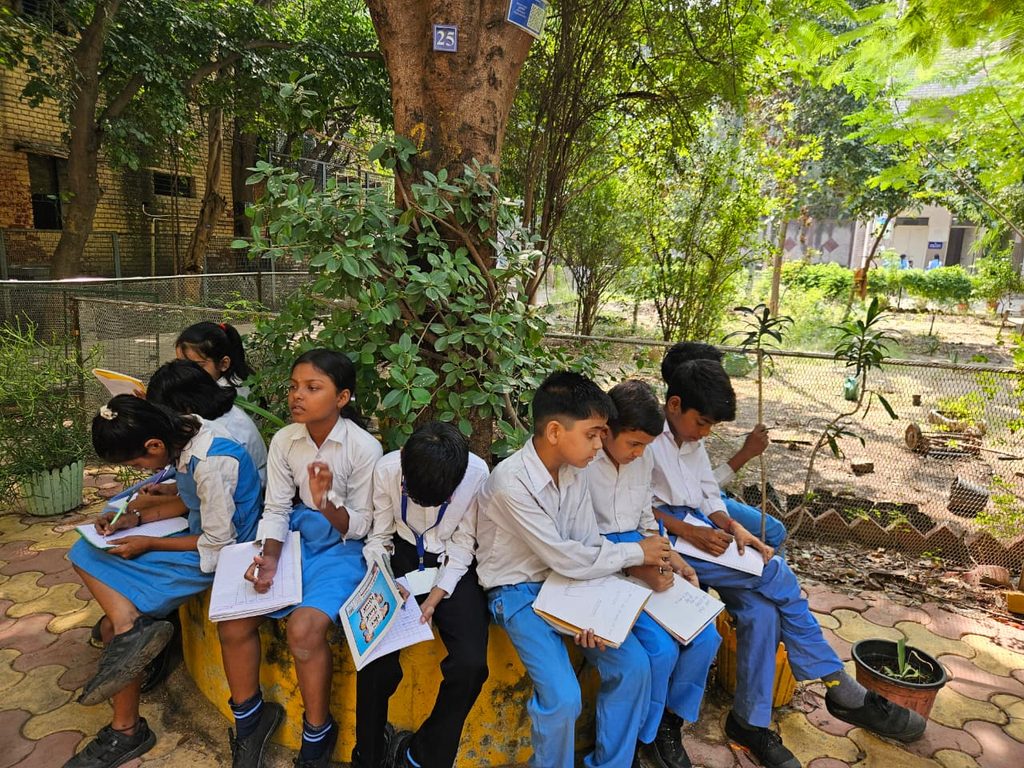
The Soil Detectives activity was designed around experiential learning, where students learn by engaging directly with their surroundings.
Rather than receiving information only through explanations, students were encouraged to observe, investigate and make connections between what they saw and what they were learning.
This approach supports several important learning outcomes.
- Scientific observation: Students practised noticing physical characteristics and identifying organisms in their environment.
- Critical thinking: Comparing soil conditions encouraged students to ask questions and consider possible explanations.
- Ecological understanding: Discovering different organisms helped students recognise that soil is a habitat supporting multiple forms of life.
- Environmental awareness: Exploring soil encouraged students to appreciate natural systems and the importance of biodiversity.
- Curiosity and engagement: Direct contact with nature made environmental concepts tangible and encouraged further exploration.
Outdoor learning also creates opportunities for students to work collaboratively, exchange observations and learn from one another. A discovery made by one student can lead to a question from another, creating a shared process of investigation.
These experiences can help children see science as an active process of exploration rather than a subject limited to definitions and diagrams.
Why Nature Education Matters for School Students
Children encounter the natural environment every day, yet many of its ecological processes remain invisible to them. Soil, insects, plants, birds and other organisms can easily become part of the background unless students are encouraged to observe them closely.
Nature education helps bridge this gap by creating opportunities for children to develop a direct relationship with the environment.
When students examine an earthworm, observe an ant colony or compare different types of soil, they begin to recognise that nature consists of interconnected systems. These small experiences can lead to broader questions about biodiversity, food production, water conservation, climate change and the protection of natural habitats.
Nature-based learning can also encourage patience, attention to detail and respect for living organisms. Instead of viewing small creatures as insignificant, students have an opportunity to understand their ecological roles and appreciate their place in the natural world.
For schools, such activities can complement classroom teaching in science and environmental studies. They provide practical experiences that help connect academic concepts with real-world observations.
The goal is not simply to teach children facts about nature, but to encourage them to remain curious about it.
Green Pencil Foundation’s Approach to Experiential Environmental Education
Green Pencil Foundation works to promote environmental awareness and climate action through educational initiatives, community engagement and sustainable practices.
The Nature Education Outdoor Class reflects the Foundation’s belief that environmental understanding develops through a combination of knowledge, observation and experience.
By engaging students in activities such as soil exploration, the Foundation aims to make environmental education interactive and accessible. These sessions encourage children to investigate their surroundings, ask questions about the natural world and recognise the importance of ecological relationships.
The Soil Detectives activity is an example of how everyday natural spaces can become valuable learning environments. A school garden, an open patch of soil or a small area beneath a tree can provide opportunities to explore biodiversity and understand ecological processes.
Such learning experiences can also help students connect local observations with larger environmental challenges. Understanding the importance of soil organisms, for instance, can lead to conversations about sustainable agriculture, composting, organic waste management, soil conservation and the protection of biodiversity.
By creating opportunities for children to learn directly from nature, Green Pencil Foundation seeks to nurture environmental awareness that can continue beyond the classroom.