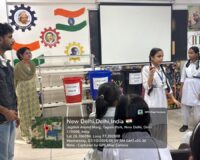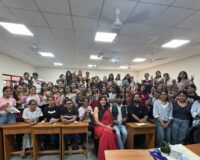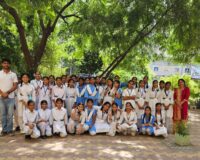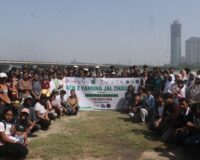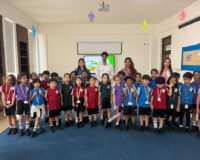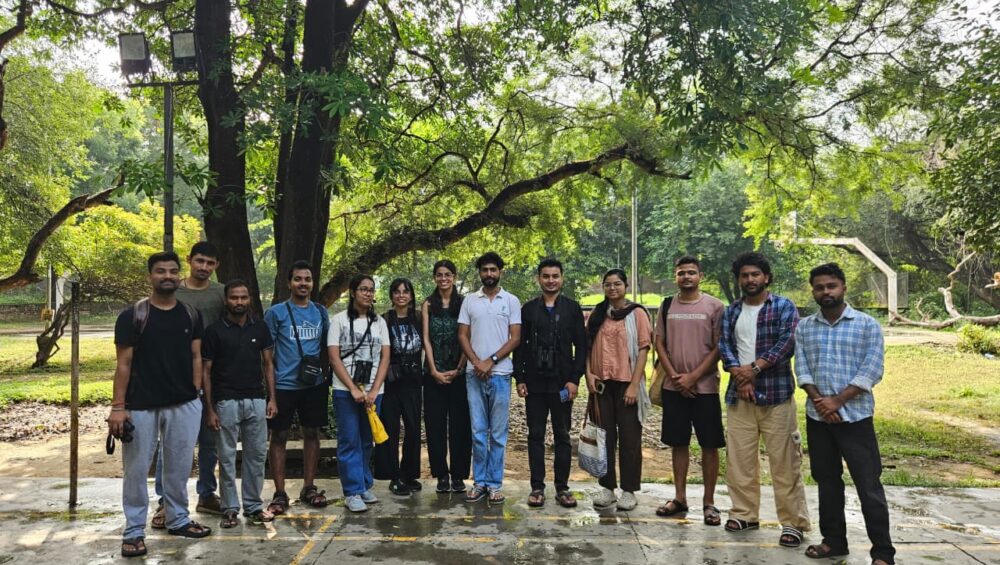
Green Pencil Foundation, in collaboration with Ataavi Bird Foundation, organised a Campus Bird Walk for students at Jawaharlal Nehru University (JNU).
The walk offered students an opportunity to step away from their regular routines, slow down, and discover the rich birdlife that shares space with them on campus. More than simply spotting birds, the experience encouraged participants to observe, listen, ask questions and develop a deeper connection with the natural world around them.
After all, nature is not always somewhere far away in a forest or wildlife sanctuary. Sometimes, it is right outside our classrooms, hostels, roads and everyday walking paths.
Discovering the Birds Around Us
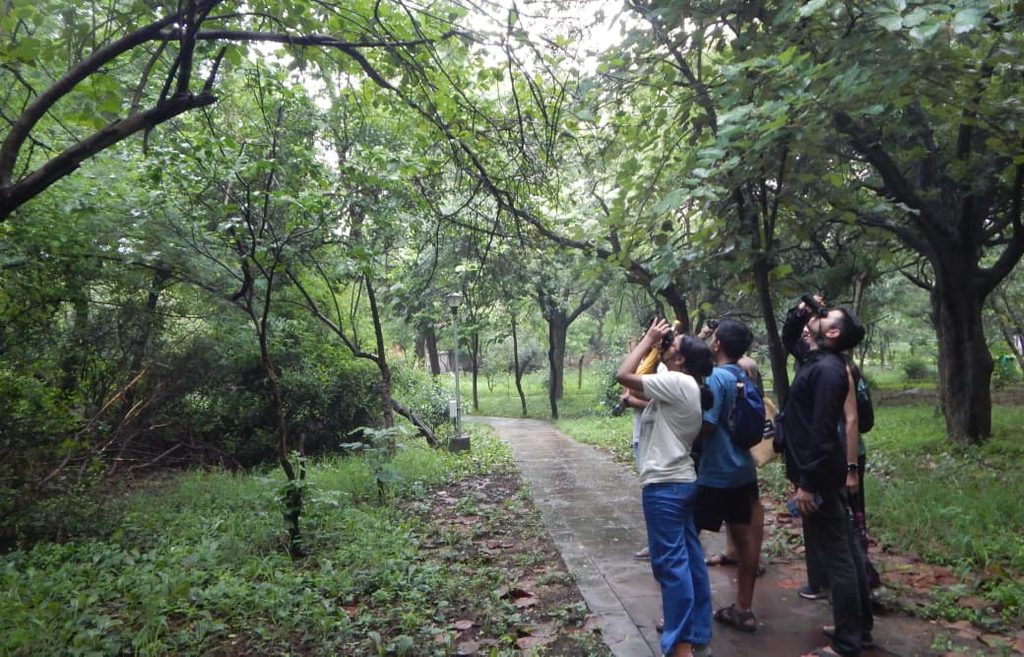
During the guided walk, students explored different parts of the campus while learning how to identify birds through their appearance, calls, behaviour, movement and habitat.
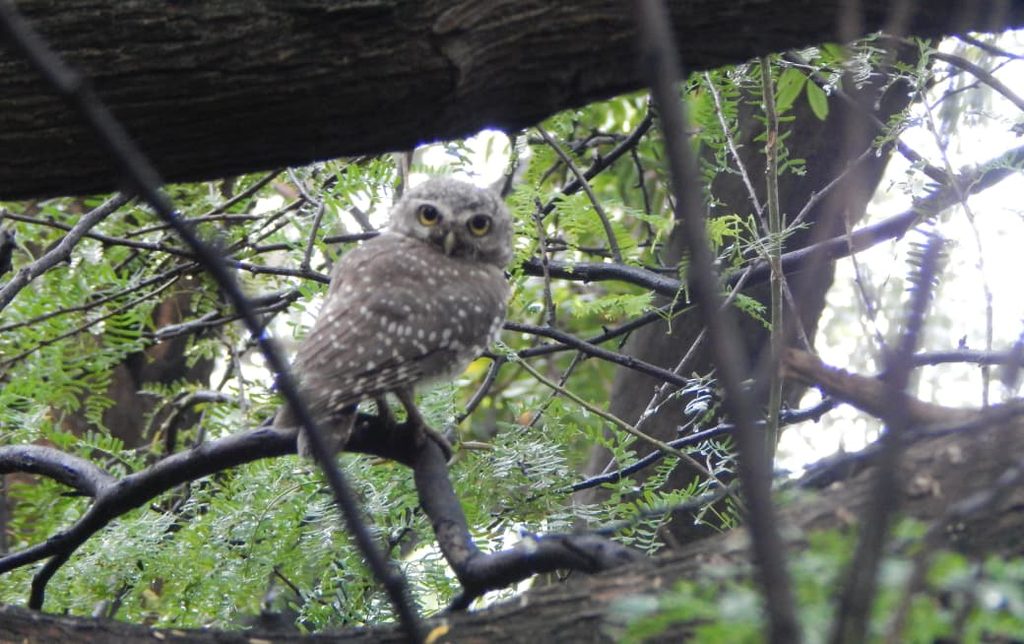
Participants spotted several species, including the Owlet, Barbet, Grey Francolin, Common Tailorbird, Indian Peafowl, Jungle Babbler, Oriental Magpie Robin, Red-whiskered Bulbul, Red-vented Bulbul, Common Myna and Rufous Treepie, among others.
For many students, the walk offered a fresh perspective on their own surroundings. Birds they may have seen every day without much attention suddenly became fascinating neighbours, each with its own calls, behaviour and role in the ecosystem.
A familiar campus began to feel a little different when viewed through the lens of nature.
Why Campus Bird Walks Matter
Bird walks may seem simple, but they can be powerful learning experiences.
Unlike learning from a classroom or a presentation, birdwatching encourages people to learn through direct observation. Participants begin noticing movement among the trees, listening carefully to different calls, observing feeding behaviour and understanding how birds interact with their habitats.
In this way, an ordinary campus can become a living classroom.
Such experiences are especially meaningful in increasingly urbanised environments, where many of us spend so much time indoors or in front of screens that we gradually lose our connection with the natural world around us.
Sometimes, reconnecting with nature can begin with something as simple as asking:
“What bird is that?”
From Seeing Wildlife to Understanding It
Birds are an important part of urban ecosystems. They contribute to processes such as seed dispersal, pollination, insect control and nutrient cycling. Their presence can also tell us something about the health and diversity of the habitats around us.
But a bird walk helps us move beyond simply seeing wildlife to actually understanding it.
When students learn why a particular bird chooses a certain tree, where it finds food, how it communicates or what challenges it faces, wildlife becomes more than something to photograph.
It becomes something worth protecting.
This understanding is an important step towards human-wildlife coexistence.
Coexistence does not always mean keeping humans and wildlife in completely separate spaces. In cities and campuses, it often means learning how to share our surroundings responsibly.
Protecting native trees, maintaining green spaces, avoiding unnecessary disturbance to nests, reducing pollution and creating bird-friendly habitats are small but meaningful actions that can make our shared spaces more welcoming to biodiversity.
Birdwatching and Mental Well-Being
The value of birdwatching goes far beyond biodiversity education.
Spending time outdoors and observing birds gives us a chance to slow down. In the middle of busy schedules, academic pressure, work and constant screen time, simply looking up at a tree or pausing to listen to a bird can create a moment of calm.
The experience encourages mindful observation.
The simple act of searching for a bird, listening to its call or quietly watching its behaviour can help us become more present and attentive to our surroundings.
Nature-based activities such as birdwatching can offer opportunities to:
- Reduce everyday mental fatigue
- Spend meaningful time outdoors
- Practise mindful observation
- Improve attention and curiosity
- Create moments of relaxation
- Encourage social interaction and shared experiences
- Develop a stronger emotional connection with nature
For students navigating academic responsibilities and increasingly digital lifestyles, such experiences can provide a refreshing opportunity to reconnect with the world beyond screens.
And the best part is that birdwatching does not necessarily require expensive equipment or specialised facilities.
Sometimes, comfortable shoes, a curious mind and the willingness to observe are enough.
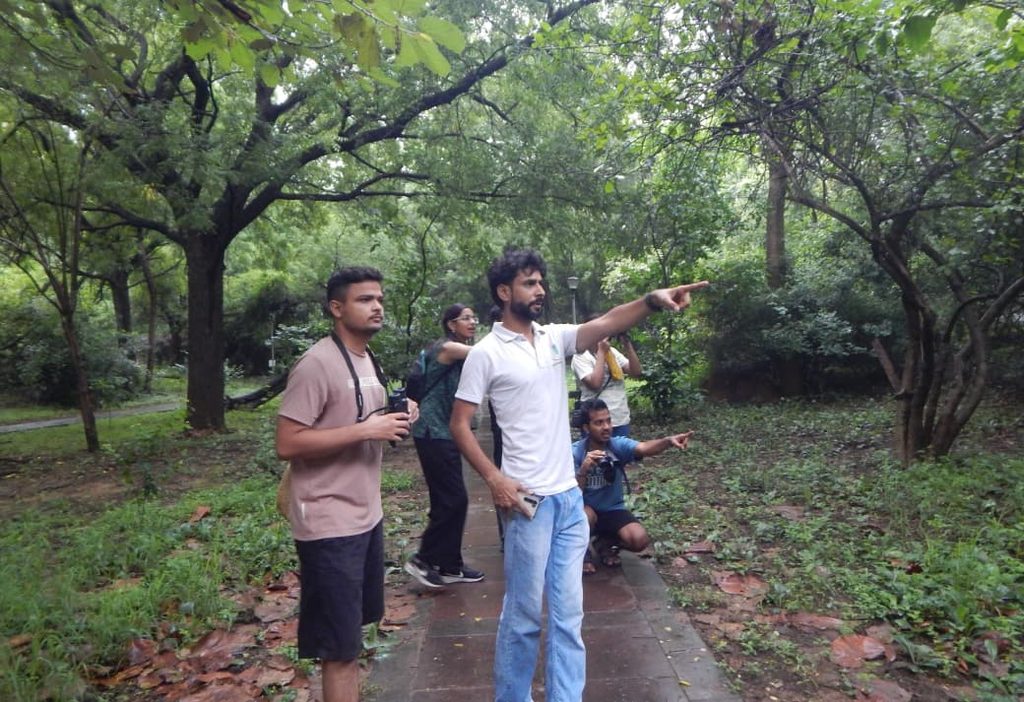
Reconnecting People with Nature
One of the biggest environmental challenges today is not only ecological degradation but also our growing disconnection from nature.
Many of us live surrounded by trees, birds and insects, yet rarely stop to notice them.
Birdwatching can change that.
Once you learn to recognise a Common Myna, Oriental Magpie Robin, Red-vented Bulbul or Rufous Treepie, your surroundings begin to look different. Trees are no longer just part of the landscape; they become homes and habitats. Bird calls are no longer background sounds; they become familiar voices.
This is where observation can become conservation.
What we notice, we are more likely to understand. What we understand, we are more likely to value. And what we value, we are more likely to protect.
Students as Future Environmental Stewards
The enthusiastic participation of JNU students made the walk even more meaningful.
Universities bring together young people who will go on to influence communities, workplaces, institutions and conversations in many different ways. Introducing students to local biodiversity can encourage them to become more attentive environmental observers and advocates.
A student who begins by learning to identify birds may later develop an interest in trees, wetlands, butterflies, insects, soil, climate change or urban ecology.
A simple bird walk can become the beginning of a much deeper environmental journey.
The goal is not to turn every participant into an expert birder. The goal is much simpler: to encourage people to become more curious and attentive observers of the living world around them.
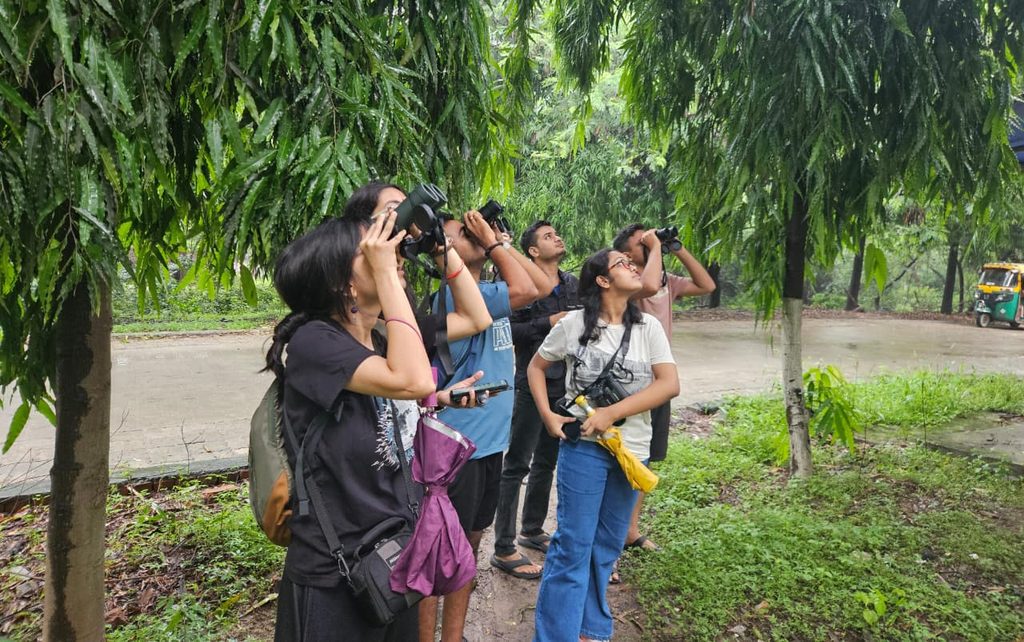
Creating Biodiversity-Friendly Campuses
Educational institutions can play an important role in protecting urban biodiversity.
A biodiversity-friendly campus can provide food, shelter, nesting spaces and resting habitats for birds and other wildlife. Native trees, shrubs, water sources, undisturbed green areas and reduced chemical use can all contribute to healthier ecosystems.
Regular bird walks can also help students and institutions better understand the biodiversity around them and observe changes in bird populations over time.
These observations can contribute to biodiversity documentation and citizen science while helping create a stronger culture of environmental awareness on campus.
Birdwatching, therefore, is not just a recreational activity. It can also become a valuable tool for environmental education, biodiversity awareness and citizen science.
From a Bird Walk to a Bigger Conversation
The JNU Campus Bird Walk was a reminder that environmental education does not always have to begin with complicated theories, reports or statistics.
Sometimes, it begins with curiosity.
Sometimes, it begins with a student stopping on a pathway, looking towards a tree and asking:
“What bird is that?”
From that one question can emerge conversations about habitats, food chains, forests, urbanisation, pollution, climate change and conservation.
That is the power of curiosity.
The observations and questions shared by students during the walk showed how a simple outdoor experience can become the starting point for a much larger environmental conversation.
At Green Pencil Foundation, we believe that meaningful experiences with nature are essential for building a generation that does not merely talk about sustainability but also understands its personal connection with the natural world.
Learning Through Nature
Through bird walks, nature education sessions, sustainability workshops, plantation drives and environmental awareness programmes, Green Pencil Foundation works to create opportunities for people, especially young people, to engage directly with environmental issues.
The collaboration with Ataavi Bird Foundation added valuable birding knowledge and guidance to this experience, helping students explore and understand the fascinating biodiversity present within their own campus.
The JNU Campus Bird Walk was, in many ways, a simple morning activity.
But it was also a morning filled with observation, curiosity, learning and connection.
Looking Beyond the Walk
The real success of a bird walk is not measured only by the number of species spotted.
Perhaps its real impact can be seen in what participants do afterwards.
Do they begin listening more carefully to bird calls?
Do they start noticing trees differently?
Do they pause to observe a bird instead of simply walking past?
Do they become curious about the biodiversity around their homes and neighbourhoods?
Do they begin asking what they can do to protect it?
If the answer to even one of these questions is yes, then the walk has already created an impact.
The JNU Campus Bird Walk on 22 August 2026 was more than a guided birdwatching session. It was an invitation to slow down, look closer, listen carefully and recognise that humans are not separate from nature.
The birds are already sharing our campuses, neighbourhoods and cities with us. Perhaps the first step towards coexistence is simply learning to notice them