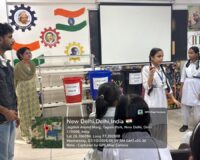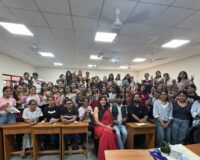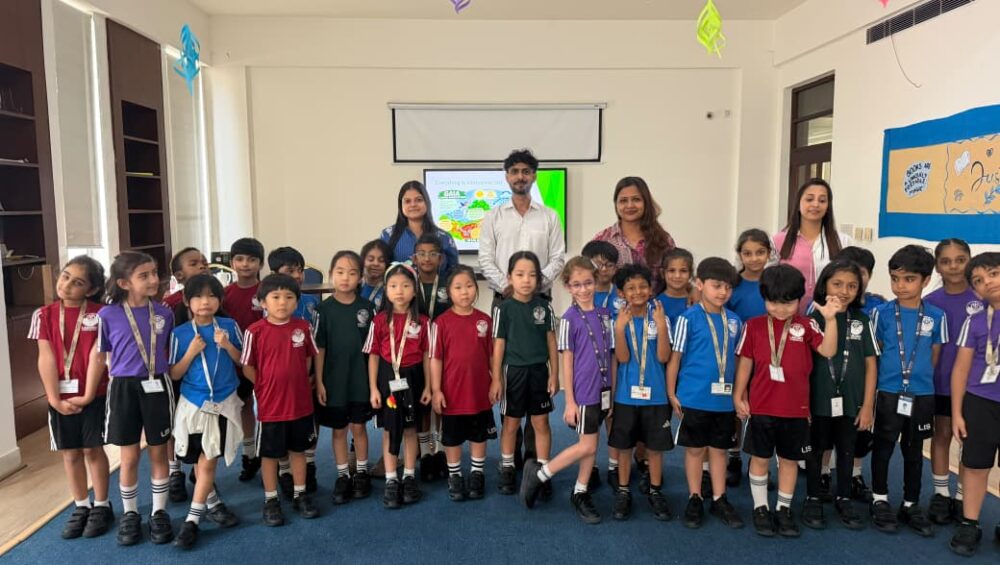
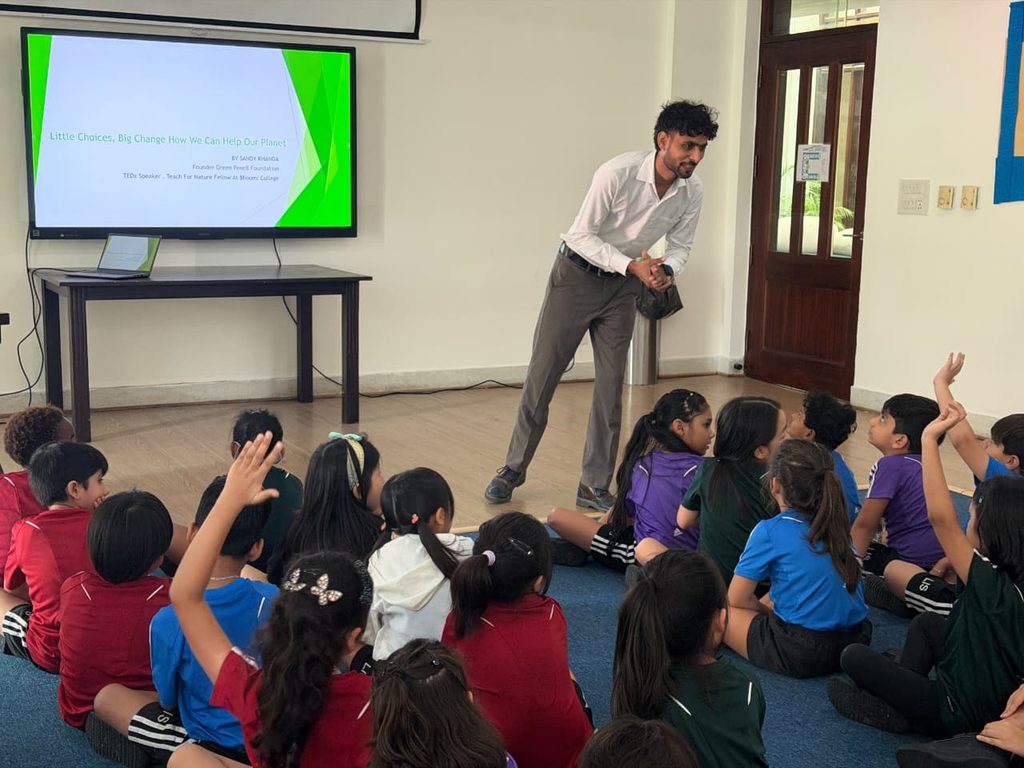
Green Pencil Foundation spent an engaging hour with students at Lancers International School, Gurugram, exploring a simple but very important question:
How does our world actually work?
From 2:00 PM to 3:00 PM, the students explored Green Energy and Gaia Theory and, more importantly, the connections between the different parts of the world around us.
The session was not just about talking about climate change or renewable energy. It was about helping children look at nature differently.
Everything Around Us Is Connected
We often learn about soil, water, trees, birds, animals and humans as separate topics.
But in nature, nothing really works in isolation.
A tree needs soil and water to grow. Birds and insects depend on plants. Humans depend on clean air, water, food and healthy ecosystems. Even the energy we use every day has an impact on the environment.
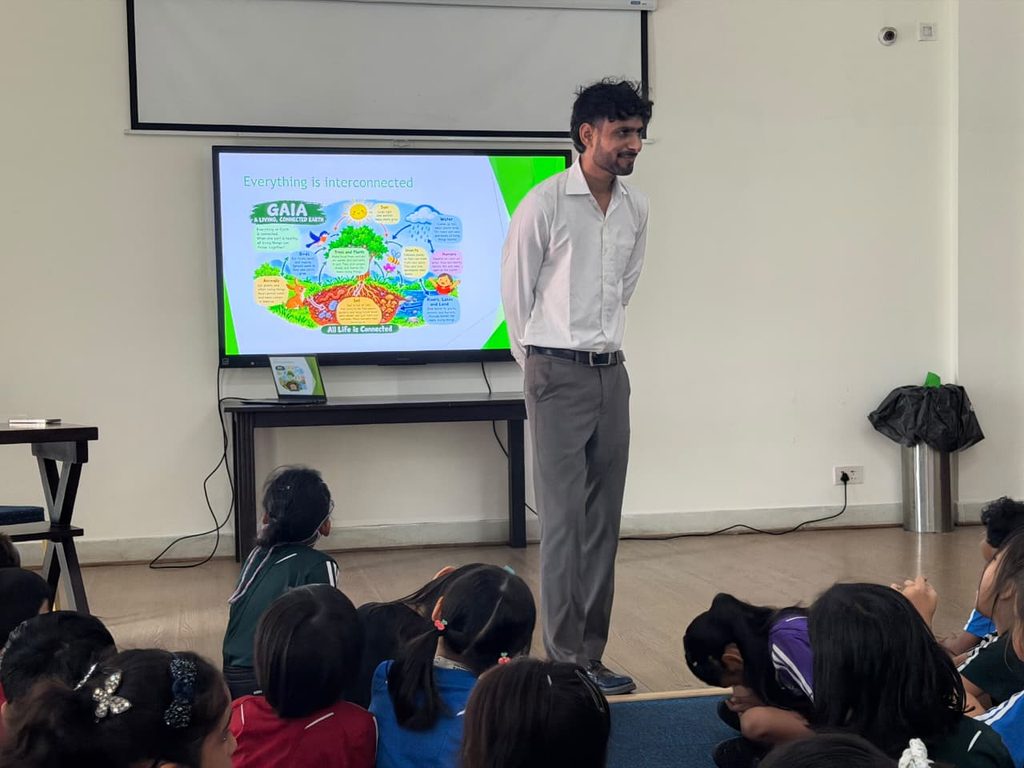
This was the idea behind introducing the students to Gaia Theory.
The children explored how the Earth functions through a continuous relationship between living organisms and their surroundings.
It was wonderful to see them connect these ideas with things they see in their own lives.
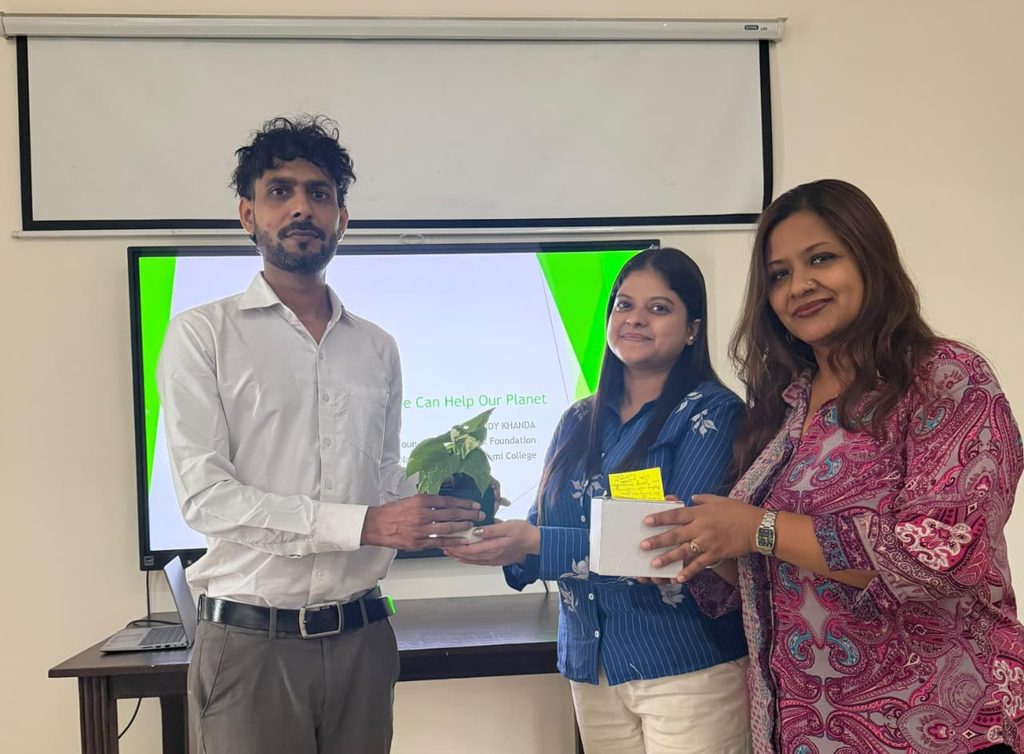
From the Sun to the Energy We Use
The conversation then moved towards green energy.
We spoke about where the energy we use every day comes from and why renewable sources of energy are becoming increasingly important.
Students explored examples such as solar and wind energy and thought about how the Sun, wind and other natural resources can help us meet our energy needs in more sustainable ways.
But the discussion wasn’t only about technology.
It was also about choices.
How much energy do we use?
Where does that energy come from?
What happens to the environment when we use it?
And what can we do differently?
These are questions that children can start thinking about from a very young age.
Learning Through Questions
One of the things we value most at Green Pencil Foundation is creating spaces where children can ask questions.
Environmental education should not always be about giving children the right answers. Sometimes, it is about giving them the opportunity to look around, become curious and discover the connections themselves.
During the session, the students were encouraged to think about the world not as a collection of separate things, but as one interconnected system.
That shift in perspective can be very powerful.
Why These Conversations Matter
Climate change can sometimes feel like a very big and distant problem.
For a child, words like global warming, renewable energy, biodiversity and sustainability can sound complicated.
But when we start with something as simple as “Where does our food come from?”, “Why do trees need soil?”, or “Where does the electricity in our classroom come from?”, these big ideas suddenly become much easier to understand.
That is where meaningful climate education can begin.
At Green Pencil Foundation, we believe that children should not only learn about the environment. They should have opportunities to understand their relationship with it.
From Curiosity to Responsibility
The session at Lancers International School was a small step in that direction.
When children begin to understand that their lives are connected with nature, they can also begin to think about their responsibilities towards it.
It could be something as simple as switching off an unnecessary light, saving water, caring for a plant, reducing waste or simply noticing the birds and insects around them.
Change does not always begin with a big action.
Sometimes, it begins with a question.
And sometimes, that question begins with a child’s curiosity about how the world works.
Building a Generation That Understands Nature
Green Pencil Foundation continues to work with schools and young people through climate education, environmental awareness, nature-based learning and sustainability programmes.
Our aim is simple: to help young people understand that they are not separate from nature.
They are a part of it.
And when we understand that connection, we can start making better choices for ourselves, our communities and our planet.