At Government Senior Secondary School, Dhakka, Delhi, Grade 5 students moved beyond textbook learning to explore how seeds germinate and plants make their own food through hands-on observation.
New Delhi | 27 October 2026
What happens when a tiny seed planted by a child begins to grow? For 92 students of Grade 5 at Government Senior Secondary School, Dhakka, Delhi, the answer was waiting in the school grounds.
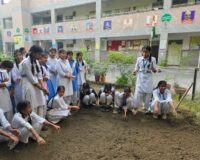
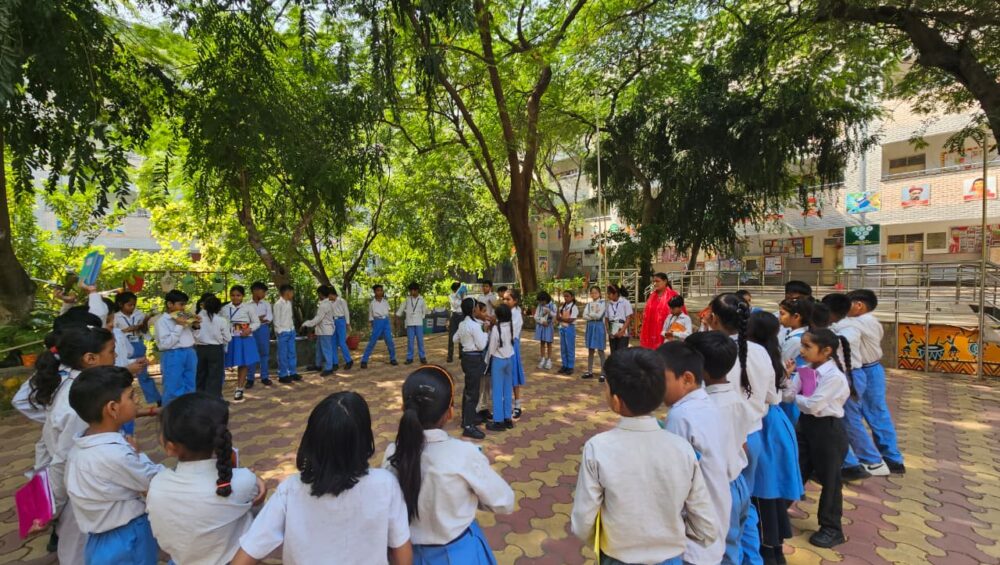
On 27 October 2026, Green Pencil Foundation organised an experiential nature-based learning session that transformed three small patches of the school grounds into outdoor science laboratories. Students from all three Grade 5 sections revisited the seeds they had sown during their previous class and observed the changes that had taken place.
For these young learners, it was more than a science lesson. It was an opportunity to witness a process they had previously encountered mainly through textbooks.
A Classroom Without Four Walls
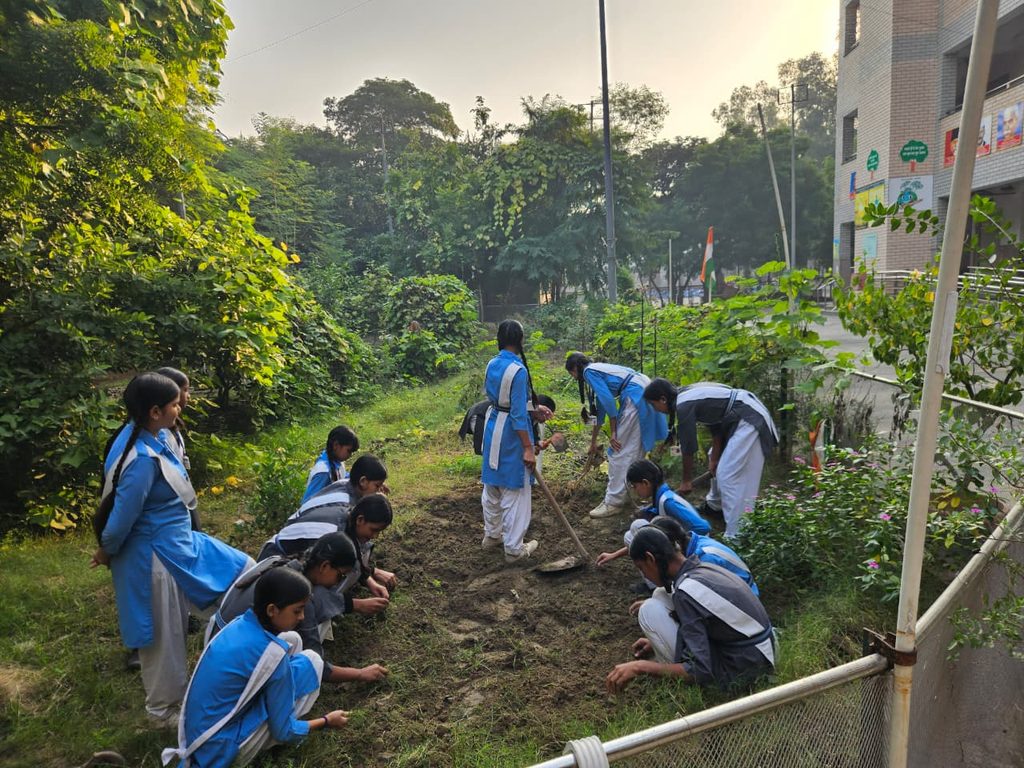
The students were engaged across three different patches where they had planted seeds in the previous session. Instead of simply listening to explanations about plant growth, they observed their own planted seeds and explored the early stages of germination.
They looked for signs of growth, examined emerging shoots and leaves, and discussed how a small seed gradually develops into a plant. The activity encouraged students to observe carefully, ask questions and connect what they saw with scientific concepts.
The continuity between the two classes made the experience particularly meaningful. Students were not observing unfamiliar plants; they were returning to something they had planted themselves. This connection helped them understand that learning is a process that unfolds over time.
Understanding Germination Through First-Hand Observation
Seed germination was one of the central learning themes of the session. Students explored how a seed begins to grow when it receives suitable conditions, particularly moisture, air and an appropriate temperature.
By observing the seeds they had sown, students could relate the different stages of germination to visible changes in their school garden patches.
The activity introduced an important scientific habit: observing evidence rather than simply memorising information. It encouraged children to become curious about what happens beneath the soil and how new life emerges from something as small as a seed.
How Do Plants Make Their Own Food? Discovering Photosynthesis
The session also introduced students to photosynthesis, one of the most essential processes supporting life on Earth.
Through observations of the growing plants and their leaves, students explored how green plants use sunlight, water and carbon dioxide to prepare their own food, releasing oxygen as a by-product.
Connecting this concept with living plants helped students understand why sunlight, water and healthy leaves are important for plant growth.
Rather than treating photosynthesis as a definition to remember for an examination, the activity encouraged students to see it as a process happening around them every day.
92 Students, Three Sections and One Shared Discovery
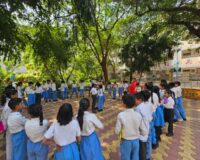
A total of 92 Grade 5 students from three sections participated in the session. The three observation patches provided an opportunity for students to engage directly with the plants they had grown.
The activity demonstrated how school spaces can become valuable learning environments. Even a small patch of land can offer opportunities to explore biology, ecology and environmental science when children are encouraged to observe and interact with nature.
More importantly, the session helped nurture a sense of ownership among students. When children plant a seed, return to observe it and understand its growth, they begin to develop a relationship with the natural world.
Green Pencil Foundation’s Approach to Nature-Based Education
At Green Pencil Foundation, we believe that environmental education should begin with experience. Children should not only learn about biodiversity, plants, climate and ecosystems from books but also have opportunities to observe and explore these concepts in their everyday surroundings.
Through its nature-based experiential learning initiatives, Green Pencil Foundation aims to make science and environmental education more practical, participatory and engaging for schoolchildren.
The session at Government Senior Secondary School, Dhakka, reflects this approach: encouraging children to learn by doing, develop scientific curiosity and build a meaningful connection with nature.
A seed may be small, but the learning it inspires can be enormous. For these 92 students, the journey from sowing a seed to observing its growth became a lesson in science, patience and the importance of nurturing life.
Because the best way to help children understand nature is to give them the opportunity to experience it.