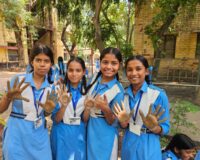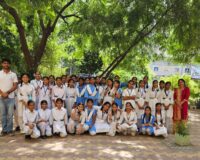
Sometimes, the best lessons begin when children leave their desks.
On 2 September 2026, something different was happening at a Government School in Delhi.
There were no pages to turn and no answers to memorise.
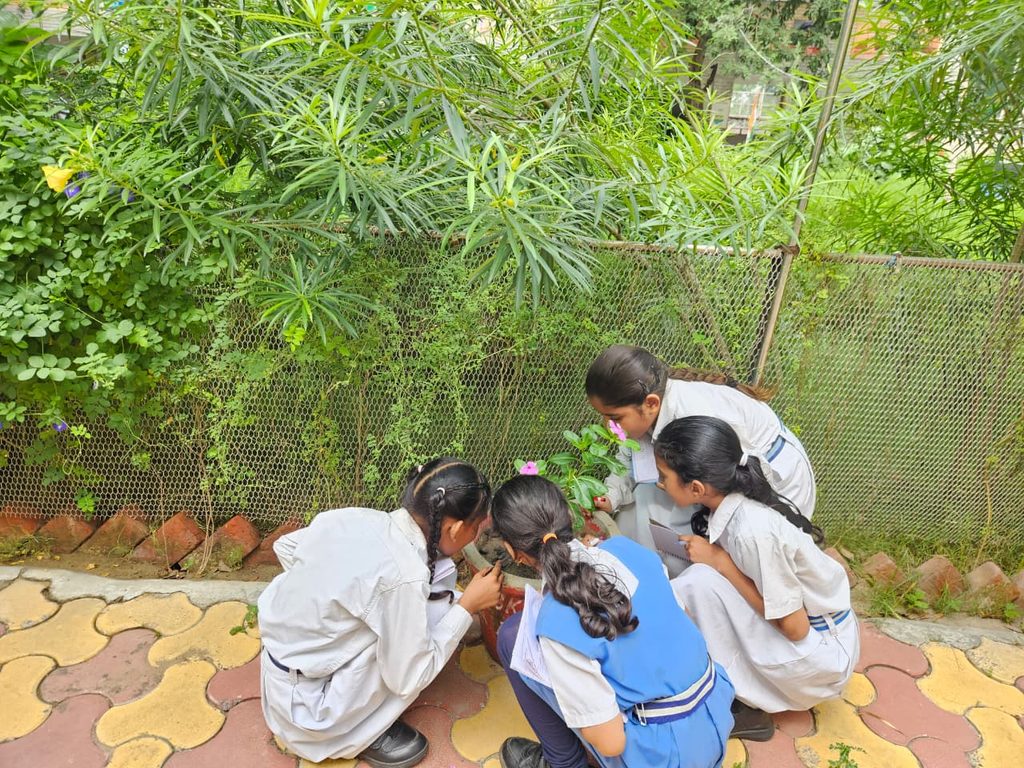
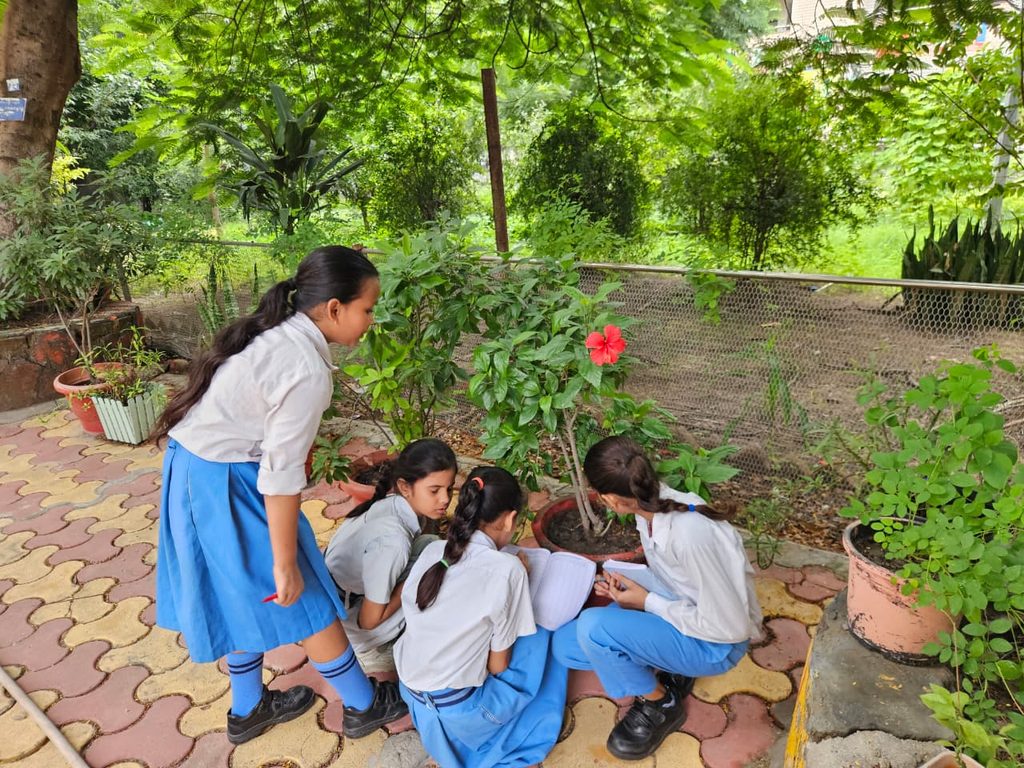
Instead, children were walking slowly through the school garden, looking under leaves, observing the soil, searching around plants and pointing excitedly whenever they discovered something.
A tiny movement in the grass could suddenly become the most interesting thing in the world.
A spider, a ant, a caterpillar, a slug, a millipede.
For a while, the school garden was no longer just a garden.
It had become a classroom.
What Happens When Children Become Nature Detectives?
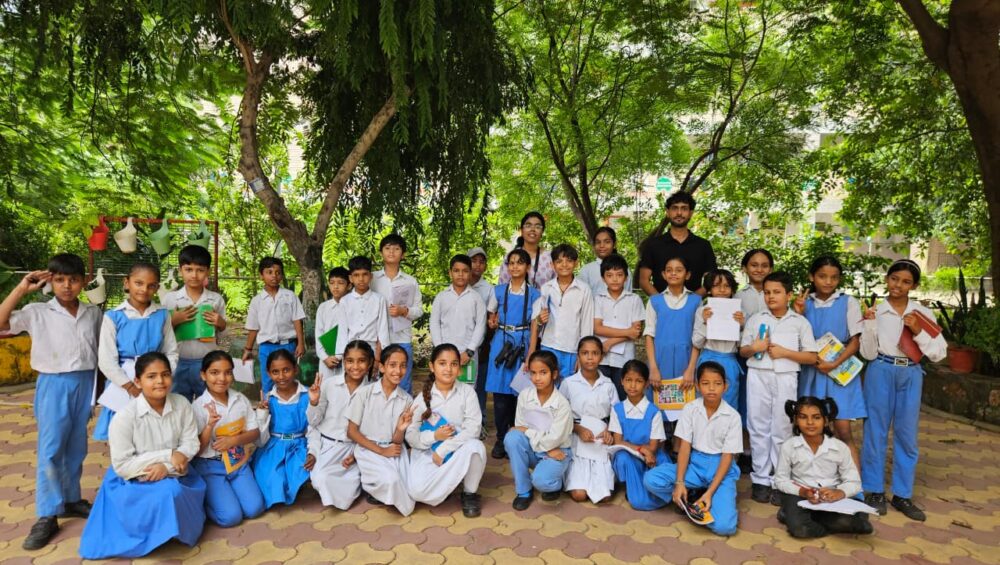
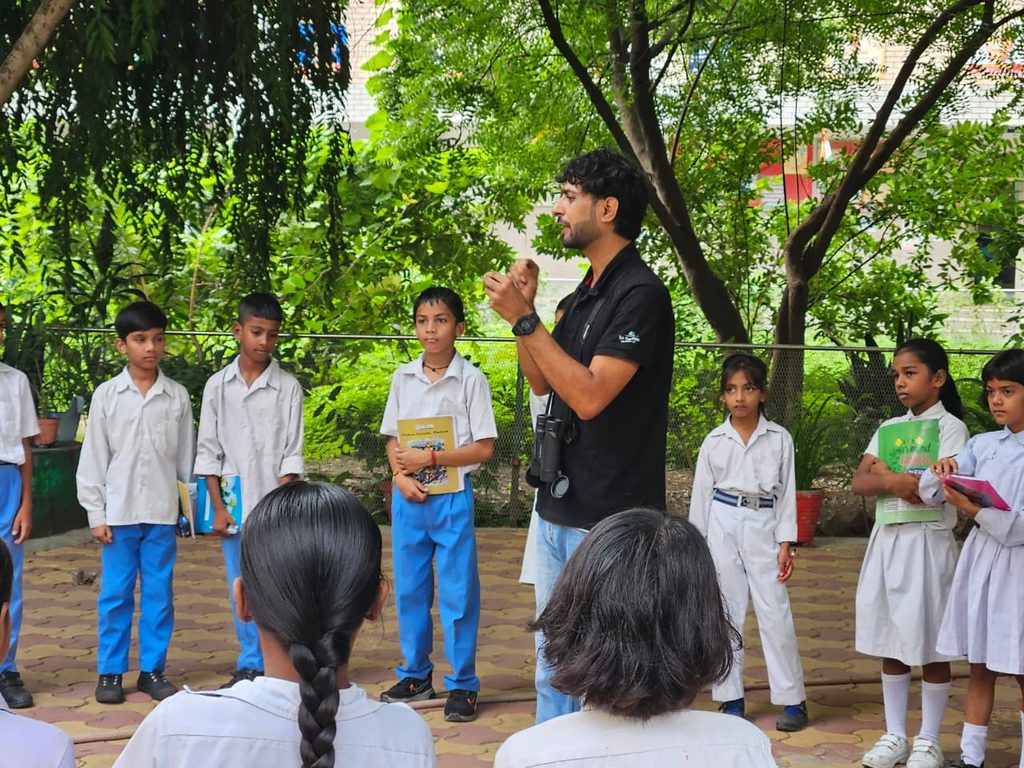
The Class 5 students were given a simple challenge: become Nature Detectives.
Their job was to explore their surroundings and find as many living organisms as they could.
But this wasn’t a race to find the most creatures.
The real challenge was to observe.
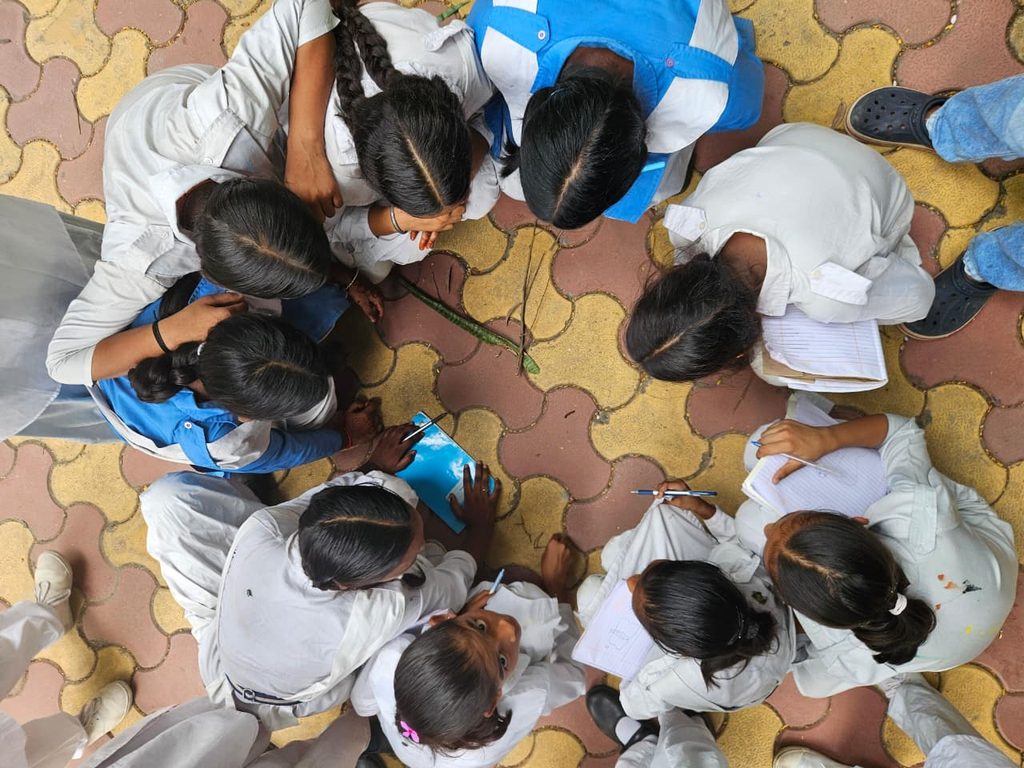
The students discovered millipedes, slugs, caterpillars, ants and spiders. They looked carefully at where these organisms were living and began asking questions about what they eat, where they move and how they interact with their surroundings.
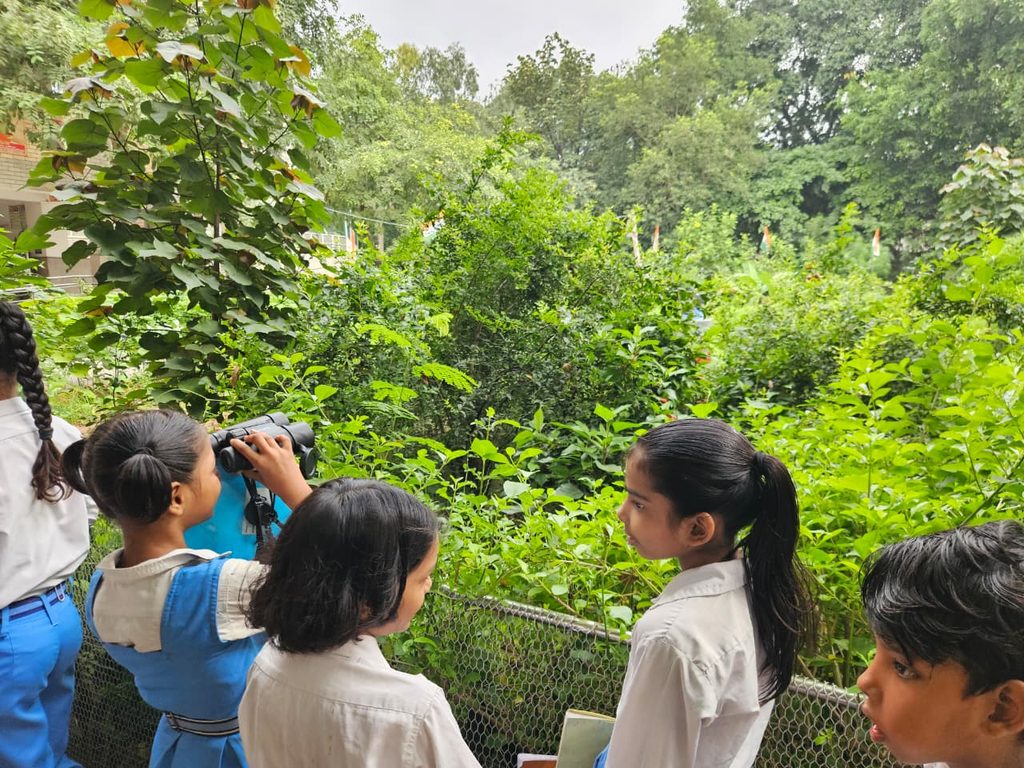
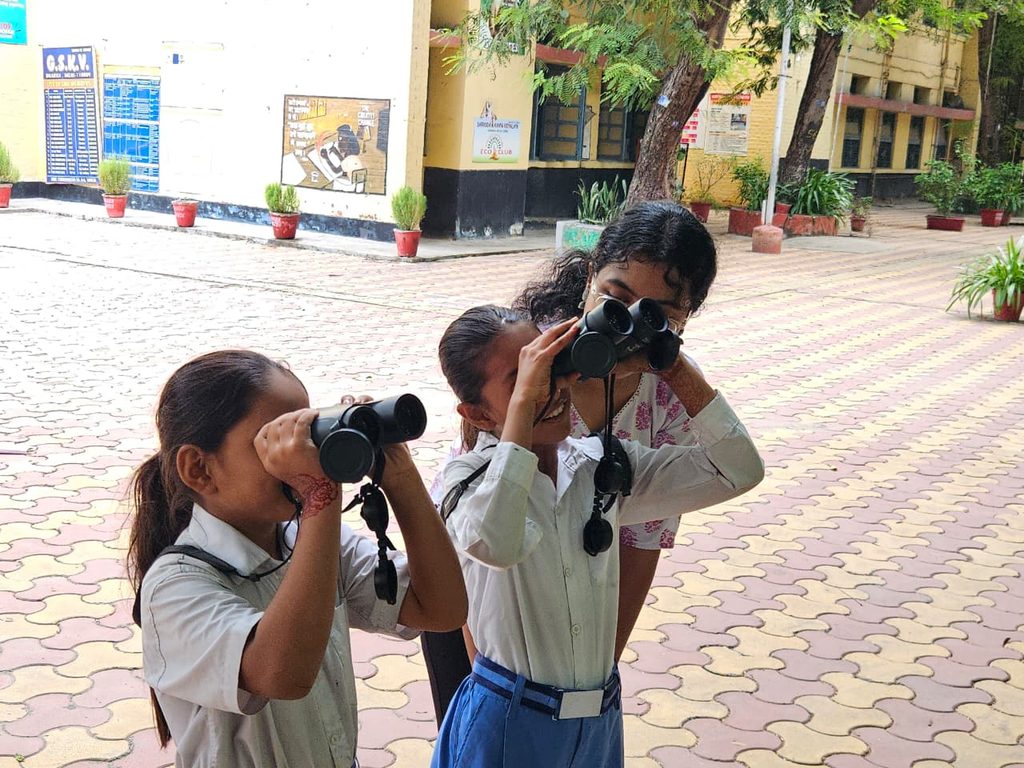
They also used binoculars for distant observation, learning that watching wildlife is not always about getting close.
Sometimes, the best way to observe is to slow down, stay quiet and give nature some space.
What started as a simple search quickly became a lesson in ecology, a millipede wasn’t just a tiny creature crawling through the soil.
A spider wasn’t just something to be afraid of. An ant wasn’t just an insect moving across the ground.
Each one had a role. Each one was part of something bigger and the children were beginning to notice it.
Then the Students Became Ecologists
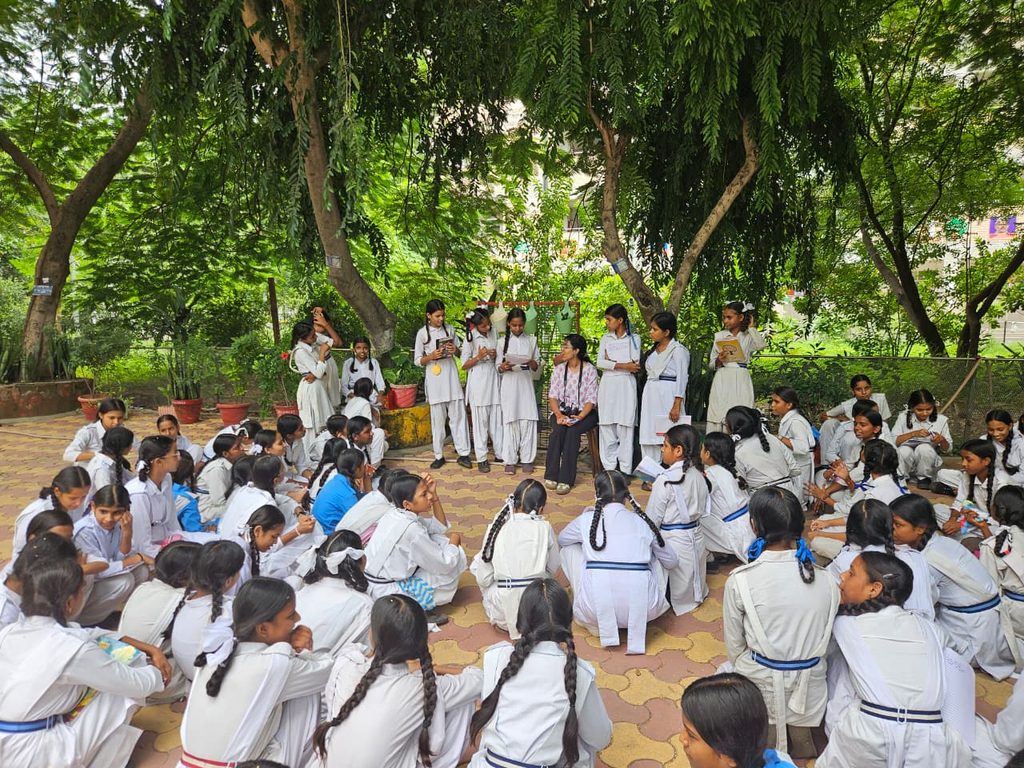
The Class 8 students had a different challenge.
They became young Ecologists.
Their outdoor classroom took them through the school’s Butterfly Garden and Kitchen Garden, where they searched for different plants, insects and other living organisms.
Instead of simply identifying what they could see, they were encouraged to think about the relationships between them.
Who eats whom?
Who depends on plants?
Which organisms might be helping the garden?
What happens when one part of the ecosystem changes?
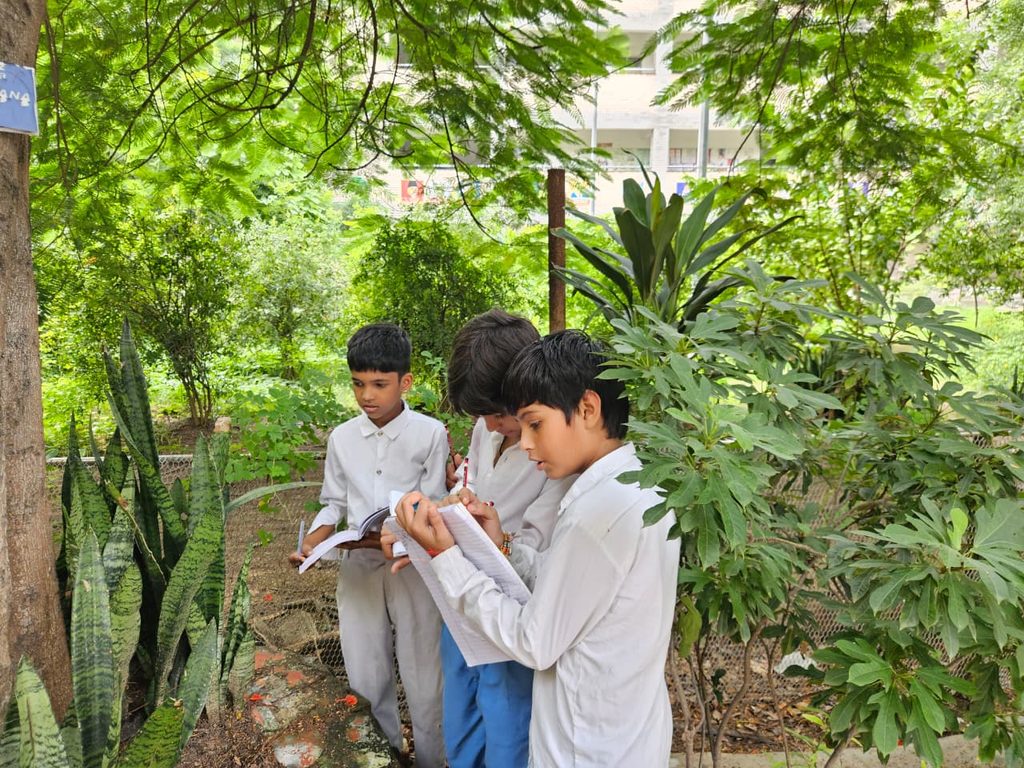
The students then created their own food webs based on their observations.
And suddenly, the garden started making sense in a completely different way.
A butterfly was connected to a flower.
A caterpillar was connected to a plant.
A spider was connected to insects, and every connection helped tell a bigger story about how an ecosystem works.
The Magic of Learning Outdoors
There is something special about learning outside.
Inside a classroom, children can learn the definition of biodiversity, outside, they can experience biodiversity.
A textbook can explain what a caterpillar looks like, but discovering one on a leaf creates a memory.
A diagram can show a food web, but building one from organisms found in the school garden makes the idea much easier to understand.
This is the power of outdoor experiential learning.
Children are not passive listeners, they become explorers, observers and problem-solvers.
They ask questions because they genuinely want to know the answer and often, the questions become more important than the answers.
Why Nature Education Is Important for Children
Today’s children are growing up in increasingly urban environments.
Their days can be filled with classrooms, screens, homework and structured activities.
Opportunities to simply stop and observe the natural world can become limited.
This is why nature education in schools matters.
Children need opportunities to experience the living world around them.
Outdoor nature education can help children:
- Develop curiosity and observation skills, understand biodiversity and ecosystems , learn how different organisms depend on each other.
- Become more comfortable exploring natural spaces , build empathy and respect for living organisms.
- Connect classroom concepts with real-world experiences , develop a sense of responsibility towards the environment
- Most importantly, it can help children build something that cannot be created through a textbook alone: a relationship with nature.
You Don’t Need a Forest to Teach About Nature
One of the most important things we discovered during this session is that nature doesn’t always have to be somewhere far away.
It can be right outside the classroom, a school garden can become a biodiversity hotspot.
A tree can become a field-study site, a patch of soil can become a world of discovery.
A butterfly garden can become an ecology laboratory, even the smallest creatures can become teachers.
This is especially important for schools in urban areas like Delhi, where children may not always have regular access to forests, wetlands or large natural landscapes.
With thoughtful planning, school campuses themselves can become spaces for outdoor environmental education.
The Questions That Matter
Perhaps the most beautiful part of nature education is watching the questions change.
At first, a child might ask:
“What is this?” Then comes: “What does it eat?” Then: “Where does it live?”
And eventually: “What would happen if it disappeared?”
That is when a child moves from simply identifying nature to understanding it ,and that understanding can become the foundation for environmental responsibility.
From Curiosity to Care
At Green Pencil Foundation, we believe that environmental education should not begin with fear.
It can begin with curiosity.
Before asking children to save biodiversity, let’s help them discover it, before telling them to protect insects, let’s give them the opportunity to observe one.
Before explaining why ecosystems matter, let’s let them experience the connections within one.
Because it is difficult to care about something we have never noticed, but once children begin to notice nature, something changes.
The garden becomes more than a garden, the spider becomes part of the ecosystem.
The butterfly becomes a pollinator, the soil becomes a living community and the child becomes a little more connected to the world around them.
Building Nature-Friendly Schools
Our vision is to make outdoor and experiential nature education a meaningful part of children’s school experience.
We want schools to become places where children can regularly observe biodiversity, explore their surroundings and learn directly from nature.
The goal isn’t to turn every child into a scientist.
It is to help every child become a curious observer and responsible member of the natural world.
The session on 2 September 2026 was one small example of what this can look like.
A group of Class 5 students became Nature Detectives, class 8 students became young Ecologists.
A school garden became their laboratory, and tiny creatures became their teachers.
The Classroom Doesn’t Have to Have Four Walls
Education happens wherever curiosity begins.
Sometimes it happens at a desk, sometimes it happens under a tree, sometimes it happens while watching an ant carry a piece of food across the ground.
And sometimes, the most memorable lesson is the one a child discovers for themselves.
Let’s give children more opportunities to look closely, ask questions and experience the living world.
Because the first step towards protecting nature may be much simpler than we think.
Notice it, explore it ,understand it, and then, care for it