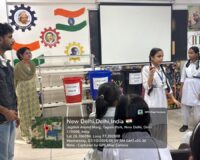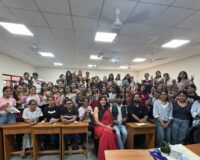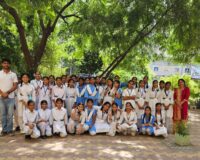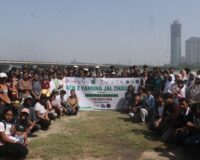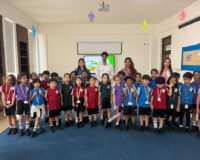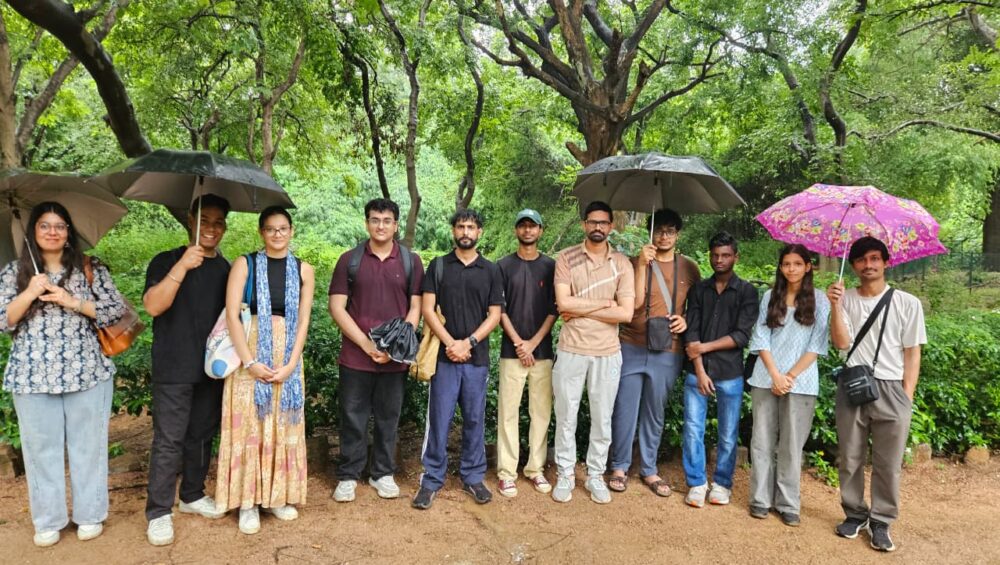
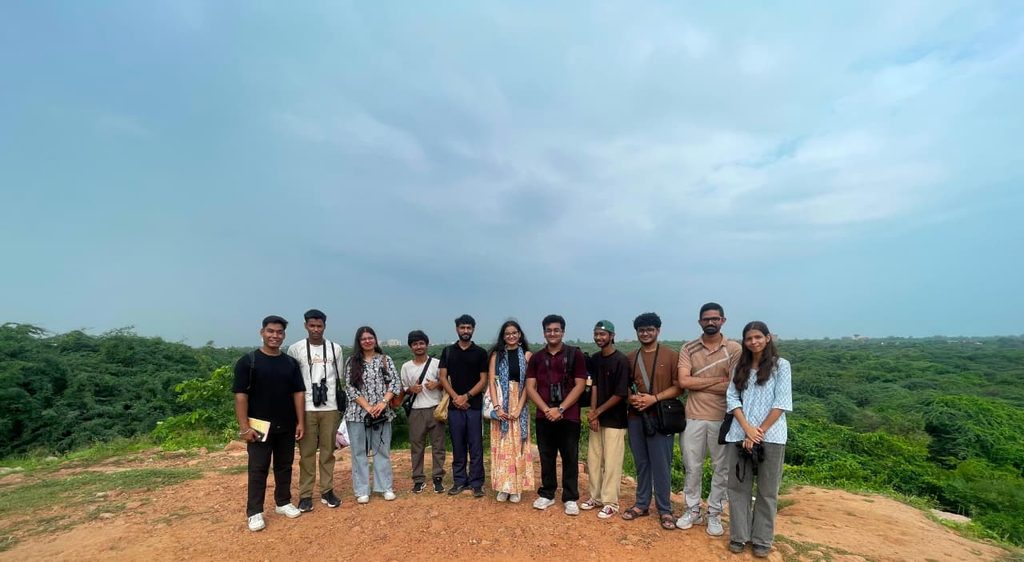
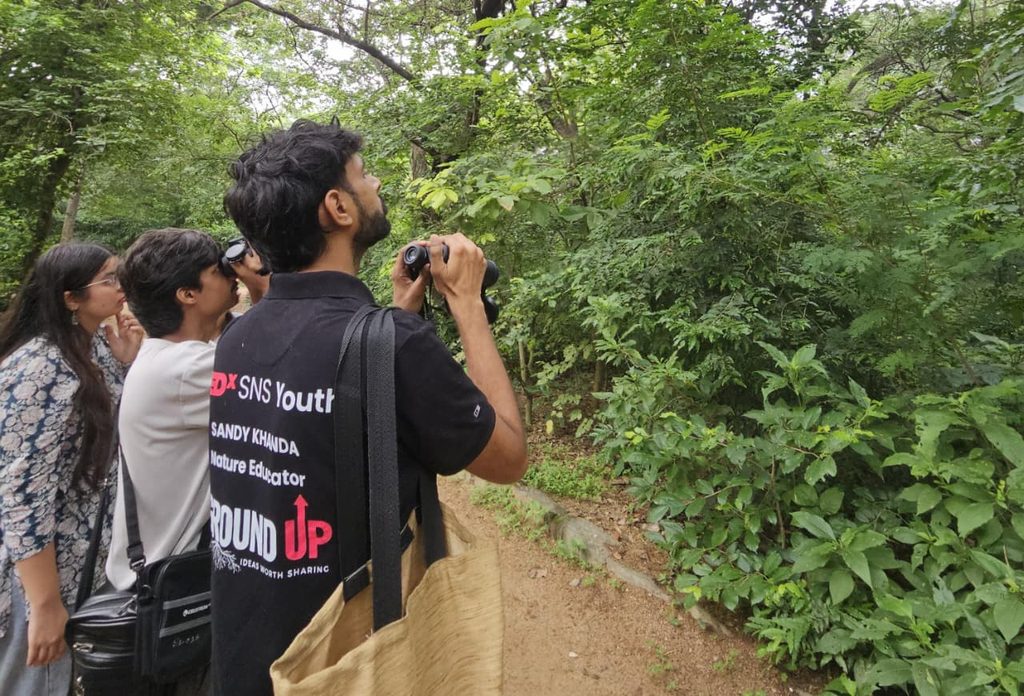
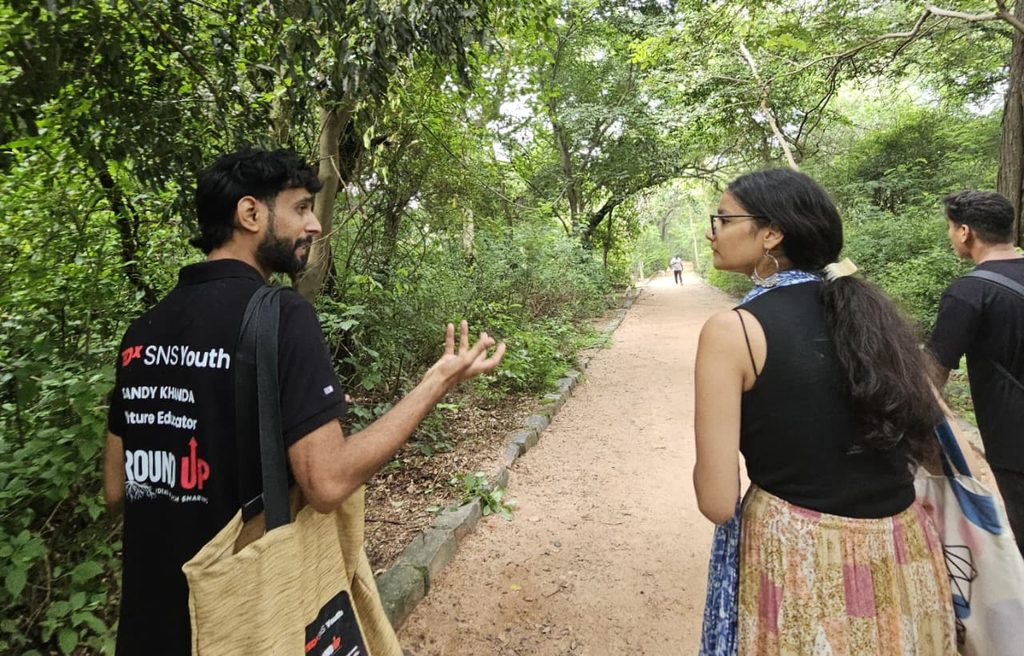
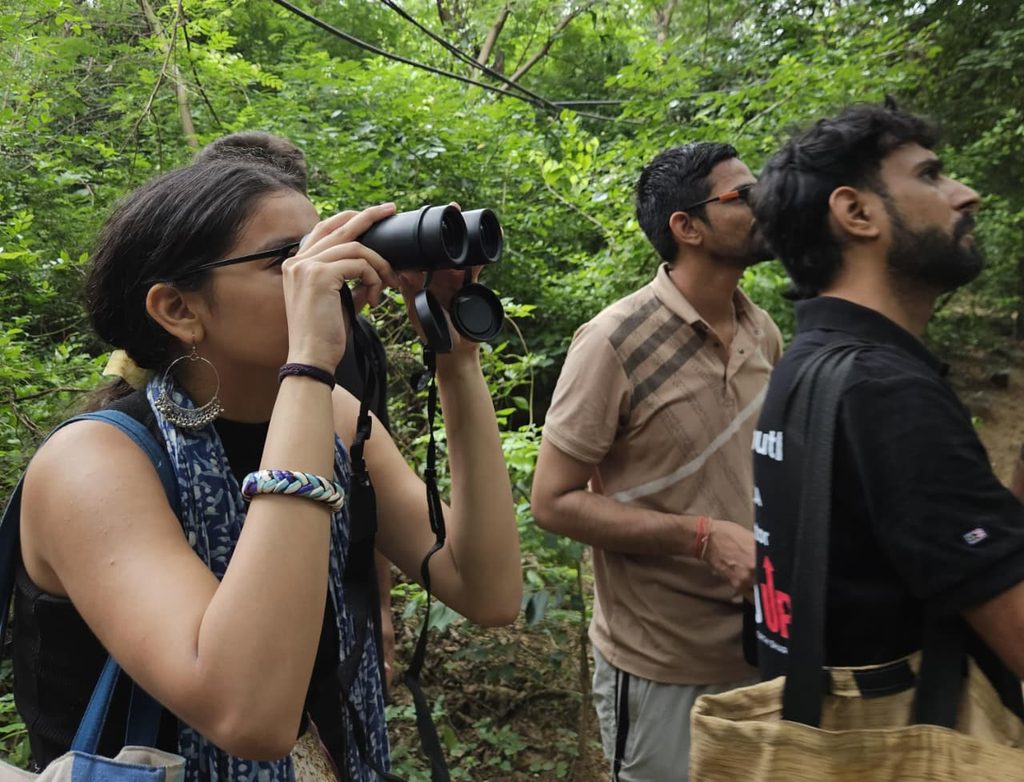
Green Pencil Foundation, in collaboration with Ataavi Bird Foundation and Green Brigade, College of Vocational Studies, University of Delhi, organised a Campus Bird Walk at Sanjay Van, Delhi. Led by Mr. Sandy Khanda, the walk brought students into a learning environment that had no walls, no blackboard and no fixed textbook chapter just trees, birds, sounds, questions and curiosity.
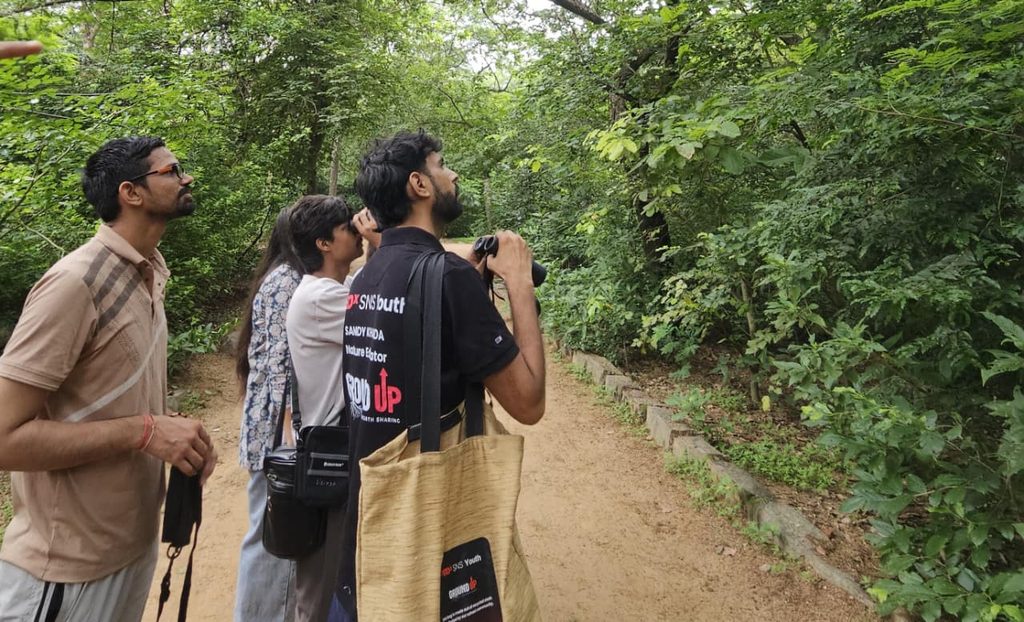
The students were encouraged to slow down, observe bird behaviour, listen carefully to bird calls and notice details that are easy to miss in everyday urban life.
And as the walk was coming to an end, an Eagle and a White-throated Kingfisher appeared, creating one of those spontaneous moments that students are likely to remember long after the session is over.
But a bird walk is about much more than spotting birds.
It is about learning how to look at the world.
Why Nature Exposure Matters for Students
For many students today, learning happens predominantly indoors. Classrooms, screens, assignments and examinations occupy a large part of their daily routine. Outdoor experiences provide a different kind of learning one that engages observation, movement, listening, curiosity and direct experience.
Research increasingly suggests that contact with green spaces and nature may support children’s and adolescents’ mental well-being, attention and cognitive development, although researchers also caution that the evidence is not uniform and more rigorous research is needed.
This is where nature-based education and experiential learning become particularly meaningful.
Instead of only reading that birds communicate through calls, students can stand quietly under a tree and actually listen.
Instead of memorising that birds have different behaviours, they can watch one searching for food, another calling from a branch and another flying across the canopy. Instead of being told to observe carefully, they experience why observation matters.
Learning to Slow Down
One of the simplest lessons from a bird walk is also one of the most valuable: slow down.
Birding requires patience. Students cannot always expect a bird to appear exactly when they want it to. They have to stop, listen, scan branches, notice movement and wait.
That process naturally encourages focused observation.
Research on nature experiences has suggested that natural environments can provide a calmer context for learning and may support attention and cognitive restoration.
For students constantly surrounded by information and digital stimulation, learning to sit quietly and pay attention to one small movement in a tree can be a powerful experience.
Nature and Student Mental Well-being
Nature exposure is not a replacement for professional mental-health care, but growing research indicates that meaningful interaction with nature can contribute to children’s and adolescents’ psychological well-being.
A meta-review of research on children and adolescents found that nature appears to have beneficial effects on mental health and well-being, while also noting limitations in the existing evidence.
Other systematic reviews have reported associations between access to green space and children’s mental well-being, attention restoration, cognitive development and stress-related outcomes.
For an organisation working with students, this reinforces an important idea:
Education should not only prepare children to perform better in examinations. It should also help them develop curiosity, awareness, confidence and a healthy relationship with the world around them.
From Bird Identification to Deeper Observation
A nature education session doesn’t have to end with knowing the names of ten birds.
The deeper learning can look like this:
“Why did that bird make that sound?”
“Why is it sitting there?”
“What is it eating?”
“Why did it suddenly fly away?”
“Can I recognise this call next time?”
These questions turn students from passive learners into active observers.
And that is the essence of experiential learning –learning by seeing, listening, questioning and experiencing.
Building a Connection With Urban Biodiversity
Sanjay Van is also a reminder that biodiversity exists within and around our cities.
Students don’t always have to travel to a national park or wildlife sanctuary to encounter nature. Urban forests, parks, wetlands, school campuses and neighbourhood green spaces can become outdoor classrooms.
When students begin recognising the birds around them, they may also begin noticing trees, insects, flowers, seeds, soil and other forms of life.
That awareness can gradually develop into something larger: a sense of responsibility towards local biodiversity.
Nature education therefore isn’t simply about creating birdwatchers. It can help create more observant citizens who understand that urban ecosystems are living systems worth protecting.
The Power of an Unexpected Moment
Perhaps the most memorable part of the Sanjay Van walk was not something written in the session plan.
Near the end of the walk, an Eagle and a White-throated Kingfisher appeared.
There was excitement. People looked up. Conversations stopped for a moment. Cameras came out. Everyone wanted to see.
That is something no textbook can completely recreate.
The unexpected sighting became a shared experience—something students could talk about, remember and perhaps even look for again on their next visit to a green space.
And that is the beauty of learning through nature.
You never know what the next moment will bring.
Green Pencil Foundation’s Approach to Nature Education
At Green Pencil Foundation, we believe environmental education becomes more meaningful when students are given opportunities to experience nature directly.
Our nature education programmes use experiential learning, observation, outdoor exploration, nature journaling, birding and creative activities to help students develop a closer relationship with their environment.
The objective isn’t simply to teach students about nature.
It is to help them notice it, question it, experience it and eventually care for it.
Because a student who has spent time observing a bird may begin to notice the tree where it lives.
A student who notices the tree may begin to wonder who else depends on it.
And a student who understands that connection may begin to think differently about how we treat our environment.
From a Bird Walk to a Lifelong Connection
The Campus Bird Walk at Sanjay Van was just a few hours long.
But the habit it encouraged can last much longer: slow down ,look closely, listen carefully, ask questions, stay curious.
Sometimes, environmental education begins with something as simple as looking up at a bird.
And sometimes, that small moment can become the beginning of a much deeper connection with nature.