Green Pencil Foundation, Ataavi Bird Foundation and Early Bird bring school students closer to nature through a guided bird walk and outdoor learning experience.
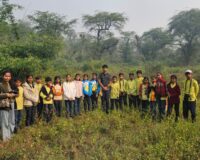
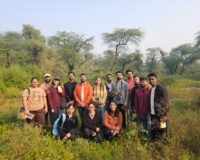
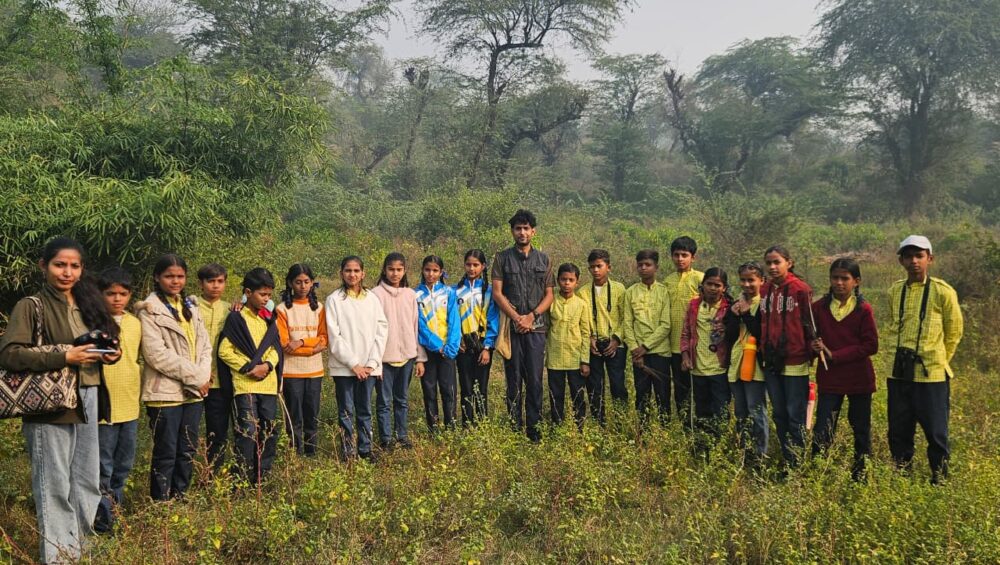
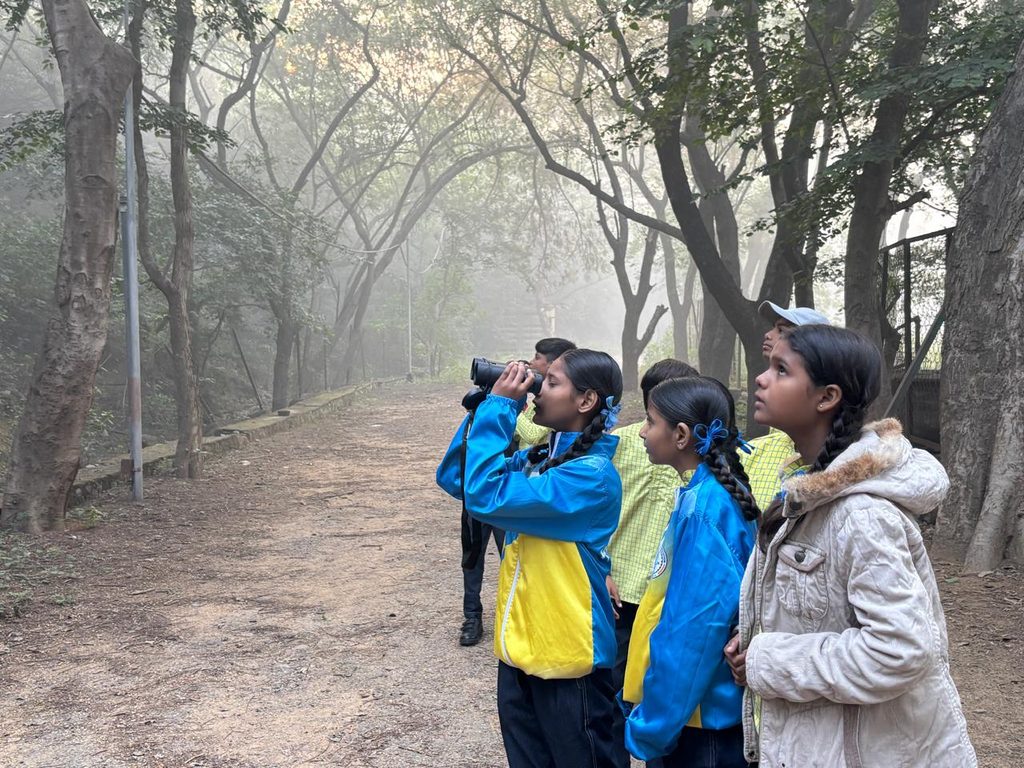
GURUGRAM, November 6, 2026: A morning in the forest turned into a classroom of discovery for school children as Green Pencil Foundation, in collaboration with Ataavi Bird Foundation and Early Bird, organised a guided bird walk at Bhondsi Forest, Gurugram, under Young Birders Month 2026.
The walk was organised from 7:00 AM to 10:00 AM and saw the participation of students from Grades 5 and 6, aged 12 and 13 years. For many children, it was an opportunity to experience the forest closely, observe birds in their natural surroundings and learn things that are difficult to understand through textbooks alone.
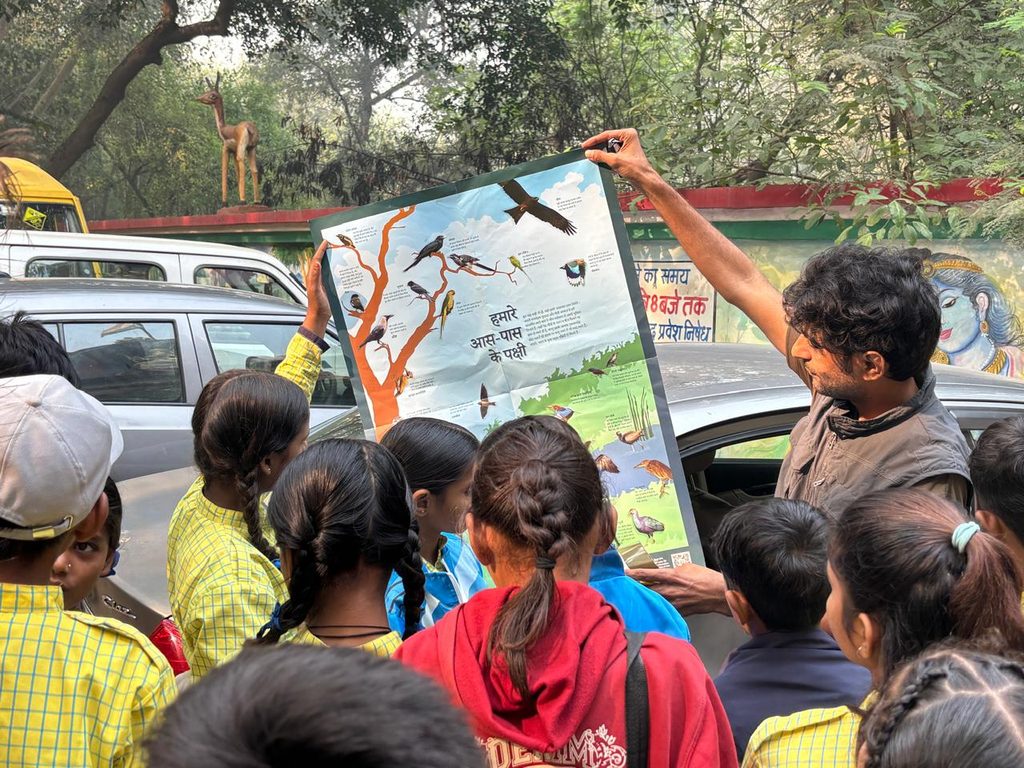
Accompanied by nature educators and bird guides, the children explored the forest, carefully observed birds and learned how to recognise them through their colours, calls, movements and behaviour. The discussions went beyond bird identification, introducing students to the relationship between birds and their habitats.
During the walk, children learned why different bird species prefer different environments, how they find food, build nests, communicate and adapt to changing surroundings. They were also introduced to bird migration and the remarkable journeys undertaken by migratory birds in search of suitable breeding grounds, food and favourable climatic conditions.
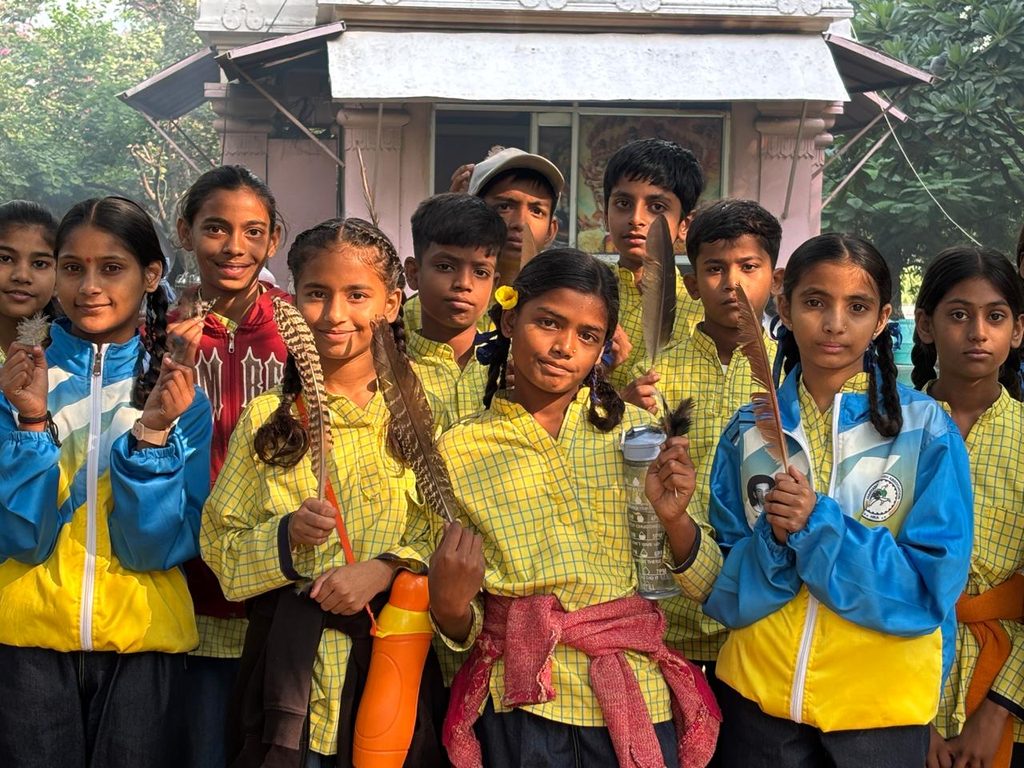
One of the interesting parts of the activity was learning about feathers. Children collected and examined naturally shed feathers, observing their different shapes, textures and structures. They learned how feathers help birds fly, maintain body temperature, camouflage themselves and communicate.
The discussions also touched upon the evolution of birds. Children were introduced to the scientific understanding that modern birds evolved from a group of feathered theropod dinosaurs. This offered an interesting perspective on how birds have developed over millions of years and adapted to different environments.
The walk also provided an opportunity to discuss some of the challenges birds face today. Habitat destruction, urbanisation, pollution, climate change and human disturbance are affecting bird populations and their natural habitats. Children discussed how these changes influence bird behaviour, migration patterns and survival.
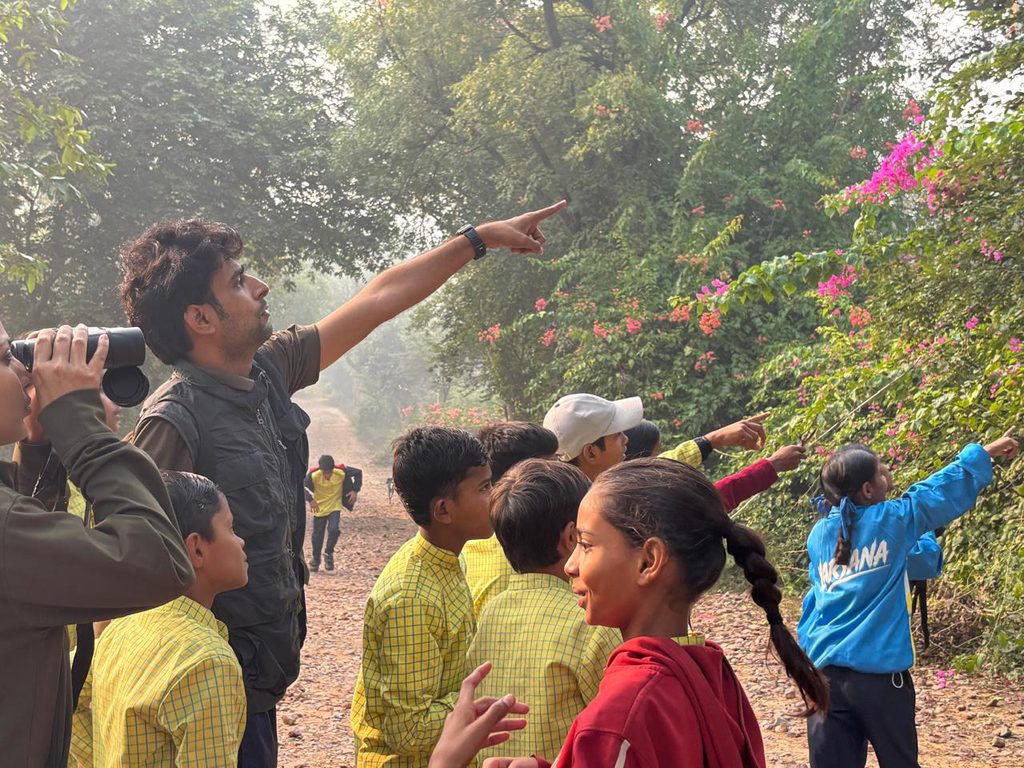
India is particularly rich in bird diversity, with more than 1,300 recorded bird species. The country is also an important part of the Central Asian Flyway, which connects migratory birds travelling between their breeding and wintering grounds across several countries. Understanding these connections helped children appreciate that bird conservation is not limited to protecting individual species but also requires protecting the habitats they depend on.
Why children need more nature experiences
In an age when children spend an increasing amount of time indoors and with digital devices, opportunities to explore forests, wetlands, parks and other natural spaces are becoming increasingly important.
Birdwatching is one of the simplest ways to introduce children to nature. It encourages patience, observation, curiosity and the habit of asking questions. A bird feeding on a tree, building its nest or calling from a branch can open up discussions about food chains, ecosystems, adaptation and biodiversity.
Experiences like these can also help children develop a stronger connection with their surroundings. When they begin noticing birds in their school playgrounds, neighbourhood parks and nearby green spaces, nature becomes a part of their everyday lives rather than just a topic in their science books.
Making nature education part of school learning
Green Pencil Foundation believes that children should have regular opportunities to learn directly from nature. Outdoor learning activities such as bird walks, butterfly observations, biodiversity mapping and nature exploration can make environmental education more engaging and meaningful.
The Bhondsi Forest bird walk was organised with the same objective: to give children an opportunity to observe, question, explore and learn while developing an appreciation for the natural world.
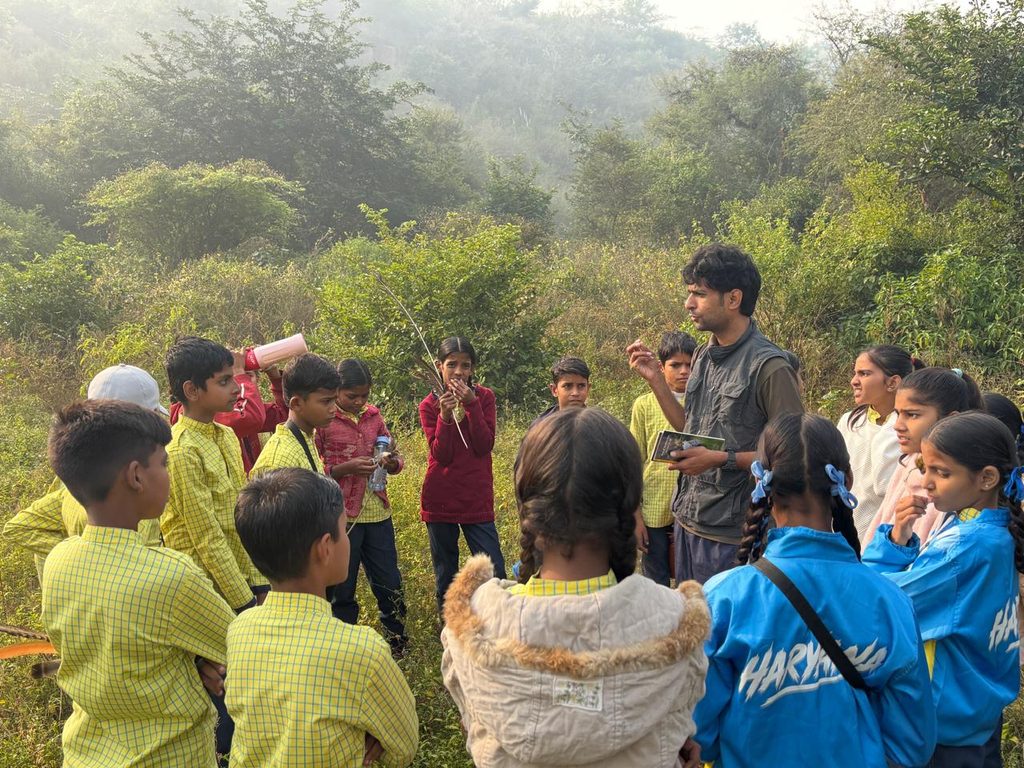
Through its nature education initiatives, Green Pencil Foundation aims to encourage schools, teachers, parents and organisations to create more opportunities for children to engage with local biodiversity.
The collaboration with Ataavi Bird Foundation and Early Bird under Young Birders Month further strengthened this effort by bringing together organisations working to make bird education accessible to young learners.
For the children who participated, the morning was not simply another school activity. It was an opportunity to slow down, listen to bird calls, observe the forest and discover the many stories hidden in nature.
Sometimes, the best lessons do not come from a blackboard. They begin with a walk in the forest, a bird on a branch and a child’s curiosity.